Flexible Learning Delivery
Programmes may be delivered through web, mobile, blended or cohort-based models. Platforms should accommodate the content, interaction and access requirements associated with each delivery model.


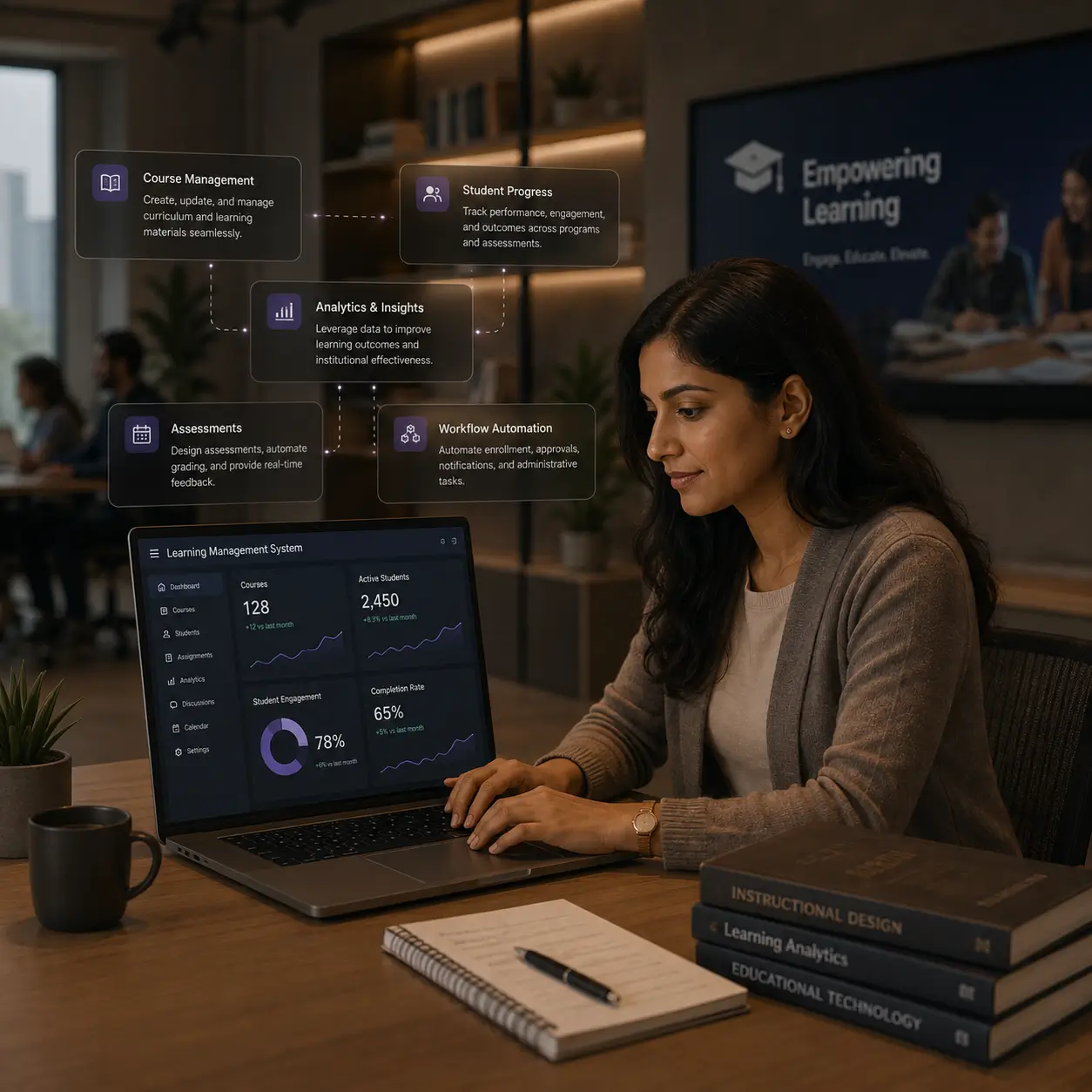
Connected platforms and workflows for learning delivery, institutional operations and knowledge access.
Education organisations are expanding how learners access
programmes, content and support across digital and blended environments. At the
same time, educators, programme teams and administrators require systems that
help them coordinate learning delivery, assessments, communication, information
and reporting.
As user numbers, programmes or delivery models grow,
platforms built for an earlier stage may become difficult to extend. Learning
and administrative processes can become distributed across different tools,
while reporting and information access depend increasingly on manual
coordination.
Our education software development services help
institutions, learning providers and EdTech businesses develop or modernise
platforms, applications and workflows around these evolving requirements. We
assess the existing environment before determining what should be integrated,
automated, extended or newly developed.
Digital learning now involves more than delivering content through a platform. Institutions and learning businesses require usable experiences, educator enablement, interoperable systems, structured administration and reliable information across the learning environment.
Global education research increasingly treats digital
learning as an institutional ecosystem rather than a collection of isolated
tools. Platform adoption is only one part of the requirement. Educator
readiness, interoperability, data governance, accessibility and operational
capacity influence how effectively digital initiatives can be sustained.
This changes the technology decision for education leaders.
The priority is not simply introducing another learning application, but
establishing how platforms, users, information and institutional workflows will
operate together as programmes and expectations evolve.
For EdTech companies, institutions and learning providers,
the stronger foundation is an environment that can integrate with useful
existing systems, support different user roles and introduce automation or AI
only where the purpose, governance and human oversight are clear.
“Digital learning creates lasting value when platforms,
people, data and institutional processes are designed to work as one
environment.”
We develop or extend platforms around defined programme structures, content models, user roles and learning-delivery requirements without positioning them as a standard proprietary product.
We build role-based portals that provide each user group with access to the content, information, activities and permitted actions relevant to them.
We develop applications for defined programme, assessment, submission, review, feedback, communication and administrative requirements.
We create structured content-access and search experiences that help authorised users find relevant learning resources and organisational information.
We design APIs and integration layers that allow suitable learning platforms, internal applications and third-party tools to exchange relevant information where technical access permits.
We automate appropriate notifications, task routing, information movement and repeatable administrative steps while retaining human oversight where academic or operational decisions are required.
We develop dashboards that organise relevant information from accessible systems around the reporting needs of educators, programme teams, administrators and leadership.
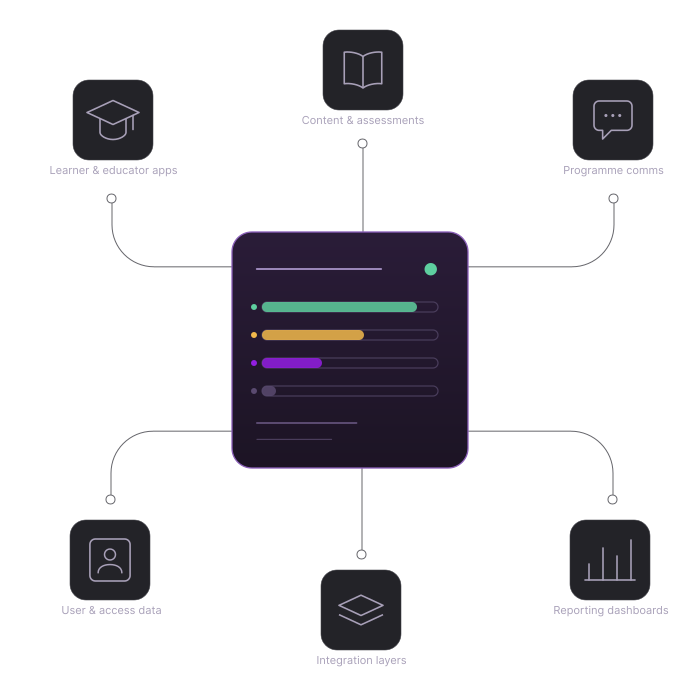
A digital learning environment connects learners, educators,
programme teams and administrators through different interfaces and
applications. Each programme may involve content, communication, assessments,
user information, administrative tasks and reporting.
Role-based experiences provide relevant access for each user
group. Integration layers connect appropriate platforms and internal systems.
Structured workflows coordinate repeatable activity, while dashboards organise
accessible information for programme and institutional oversight.
AI may support content discovery, knowledge access, search
or defined workflows where the use case, governance model and available
information justify its application. Academic decisions and learner-facing
interventions should retain appropriate human oversight.
SumCircle combines consulting, custom software, intelligent workflows, AI and cloud capabilities to build platforms and applications around learning delivery, administration, knowledge access and evolving institutional needs.
Build Commerce Around How Your Business Works
Learn MoreClearer Technology Decisions Built Around Your Business
Learn MoreModernise Systems and Workflows Without Disrupting Operations
Learn MoreInfrastructure Built Around What Needs to Run
Learn MorePut Intelligence Where Work Happens
Learn MoreCustom Software Built Around Your Business
Learn More
Build Commerce Around How Your Business Works
Learn More
Clearer Technology Decisions Built Around Your Business
Learn More
Modernise Systems and Workflows Without Disrupting Operations
Learn More
Infrastructure Built Around What Needs to Run
Learn More
Put Intelligence Where Work Happens
Learn More
Custom Software Built Around Your Business
Learn More
Technology That Educates, Evaluates and Empowers
Brahmi is an intelligent enterprise search platform built to help authorised teams find relevant answers, documents and organisational knowledge across approved files, repositories and connected systems.
Discuss your learning model, user requirements, existing
platforms and institutional workflows with us to determine what should be
retained, connected, automated, modernised or newly built.