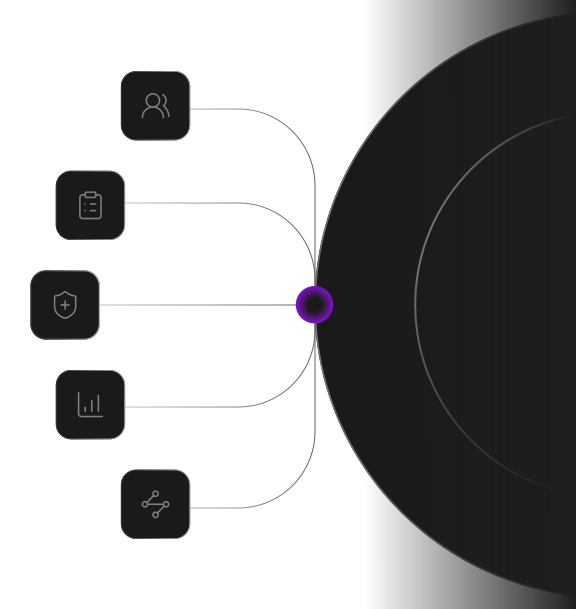
Experience Independence
Allow the customer-facing layer to evolve without requiring the complete commerce engine to change with it.

Headless ecommerce development services that separate the customer experience from the commerce engine when greater flexibility justifies a more distributed architecture.
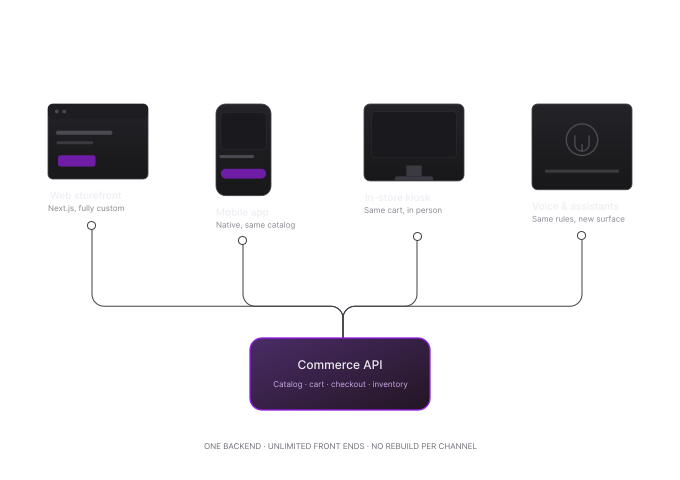
Traditional commerce platforms keep the customer-facing experience and commerce engine closely connected. Headless commerce separates them so each layer can evolve with greater independence.
This flexibility can support more specific customer experiences, content requirements or multiple touchpoints drawing from shared commerce capabilities. It also introduces additional responsibility across APIs, integrations, deployment, monitoring and ongoing operations.
We assess whether those benefits justify the architecture
before recommending a headless approach. The goal is not to introduce more
technology. It is to create the flexibility the business genuinely needs while
keeping the complete commerce environment supportable.
Headless architecture becomes valuable when the limitations
of a tightly coupled platform restrict required experiences or technology
decisions. The frontend gains greater independence while products, pricing,
carts, checkout and orders continue to be managed through the commerce layer.
We begin by identifying the limitation a headless
architecture needs to resolve. This may involve frontend restrictions, complex
content and commerce requirements or the need to support multiple customer
touchpoints through shared commerce capabilities.
We then assess whether the existing platform can address the
requirement without decoupling. When headless commerce is justified, we define
clear responsibilities across the experience layer, APIs, commerce services,
content systems and business integrations.
The architecture is designed with equal attention to
flexibility and operational responsibility so the business understands what it
gains and what it will need to support.
Identify where the current commerce architecture restricts the required customer experience, content model or channel strategy.
Determine whether decoupling creates enough business or technology value to justify the additional architectural responsibility.
Define clear responsibilities across the frontend experience, commerce engine, content systems and supporting services.
Plan how customer channels, commerce capabilities and relevant business systems exchange information.
Develop the decoupled environment and test experience behaviour, commerce functions, APIs and system connections together.
Establish the deployment, monitoring and ongoing operating approach required across the distributed architecture.
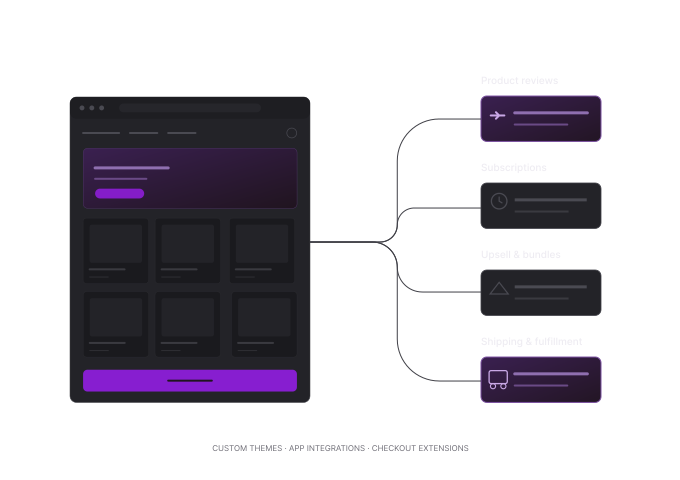
Build Shopify Around How Your Business Sells
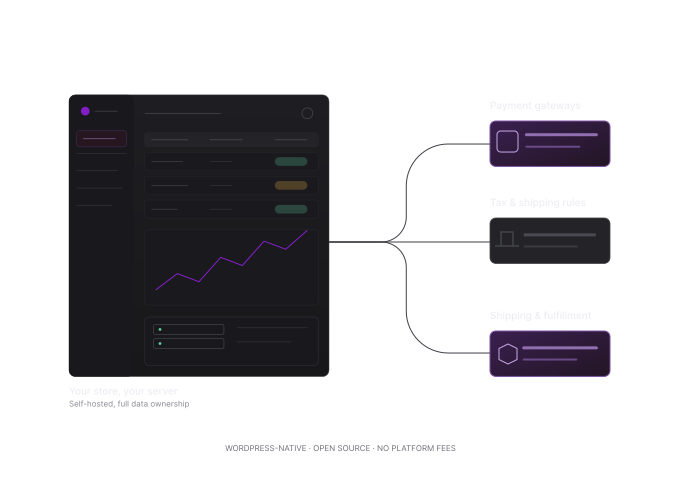
Learn MoreMake WooCommerce Flexibility Work for the Business
Learn MoreCustom Commerce Shaped Around Your Business
Learn More
Build Shopify Around How Your Business Sells
Learn More
Make WooCommerce Flexibility Work for the Business
Learn More
Custom Commerce Shaped Around Your Business
Learn MoreDiscuss where the current commerce architecture is limiting
the experience or operating model. We will help assess whether decoupling
creates enough value and define the architecture required to support it.