Cloud & Infrastructure

Infrastructure Built Around What Needs to Run

Design, modernize and deploy infrastructure around your applications, workloads, data and control requirements, whether the right environment is cloud, private, hybrid or a combination.

Trusted by startups and enterprises worldwide

Choose the Environment That Fits the Workload

Infrastructure decisions should begin with what the business needs to run, not with a preference for where it should run.

Applications, data, integrations, security requirements, expected usage and operational control all influence whether the right environment involves public cloud, private infrastructure, existing systems or a combination.

We assess those requirements before defining the architecture and implementation path.

Where migration is appropriate, Cloud Migration as a Service can form part of that wider infrastructure direction, connecting the movement of applications and workloads with the architecture, dependencies and operating requirements around them.

Build Infrastructure Around Real Requirements

Explore Our Insights

The right infrastructure creates an environment where applications and workloads can operate according to the performance, capacity, control and accessibility the business actually requires.

We look beyond infrastructure as an isolated technology purchase. Existing systems, application architecture, data, integrations, security requirements and expected change all influence what should remain, what should move and what should be modernized.

This keeps infrastructure decisions proportionate to the requirement without introducing unnecessary capacity or complexity.

Where Cloud & Infrastructure Adds Value

Support the Workload Properly

Design infrastructure around what applications, systems and data actually need to run and operate effectively.

Choose the Right Environment

Evaluate cloud, private and hybrid options according to workload, control, security and operating requirements rather than following a default model.

Modernize Existing Infrastructure

Improve, integrate, expand or migrate environments where the existing infrastructure no longer supports required applications or workloads effectively.

Build for Appropriate Scale

Plan infrastructure capacity around realistic usage and expected growth without introducing unnecessary architectural complexity.

Keep Applications and Infrastructure Connected

Consider deployment, integrations, data and application architecture together so infrastructure decisions support the systems operating above them.

Design Control Into the Environment

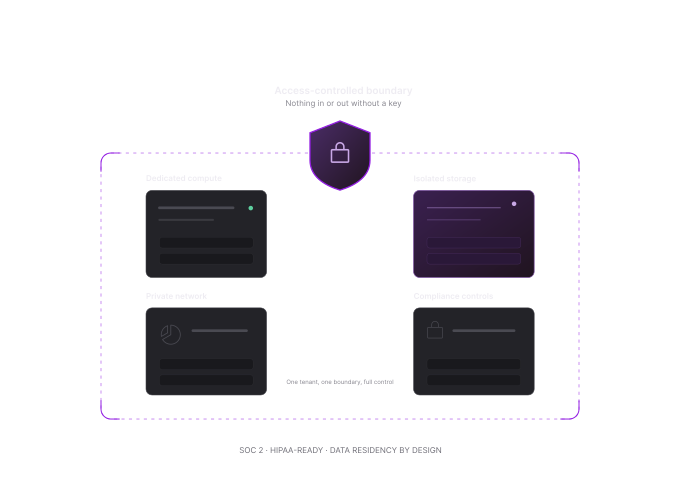
Account for data sensitivity, access requirements, operational responsibility and deployment controls as part of the infrastructure architecture.

A Structured Approach to Infrastructure Decisions

Explore Our Insights

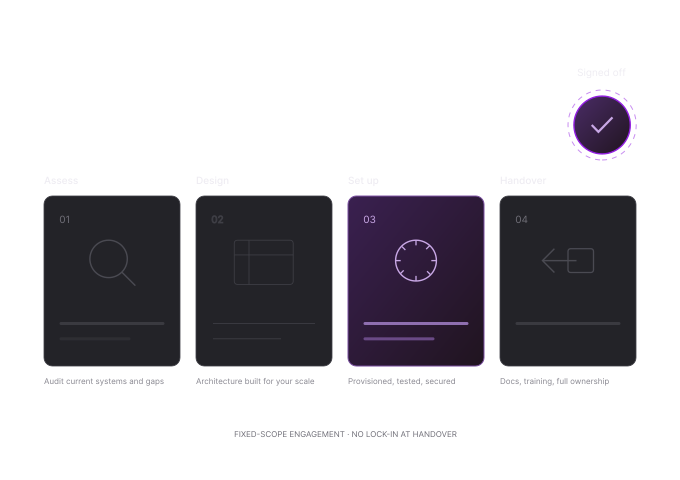
Infrastructure architecture begins by understanding what needs to run, what already exists and what the organization requires from the environment.

We assess applications, workloads, data, dependencies, security and control requirements before deciding whether existing infrastructure should remain, be improved or move toward a different model.

This keeps cloud, private and hybrid infrastructure as architectural choices rather than predetermined answers.

Clarify the applications, systems, data, users and workloads the infrastructure needs to support together with their operating requirements.

Examine current infrastructure, application dependencies, integrations and constraints to understand what already works and where change may be required.

Understand expected usage, performance needs, data considerations, access, operational control and realistic capacity requirements before selecting an architecture.

Determine whether cloud, private, hybrid, dedicated or existing infrastructure provides the most appropriate environment for the requirement.

Where systems or workloads need to move, plan the transition around applications, data and dependencies and continue adapting the environment as requirements change.
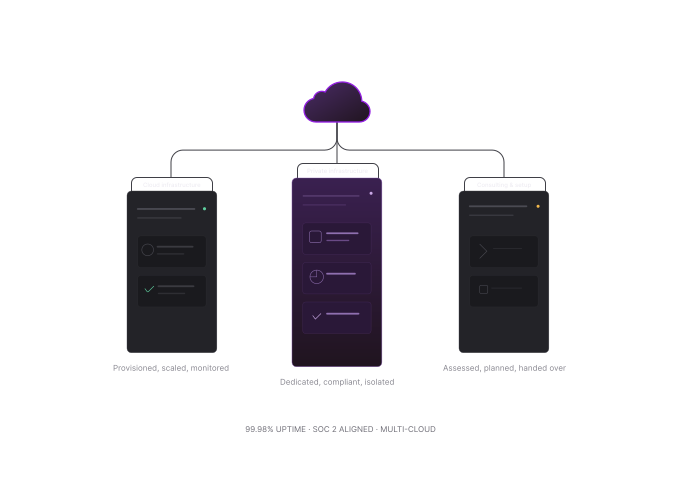
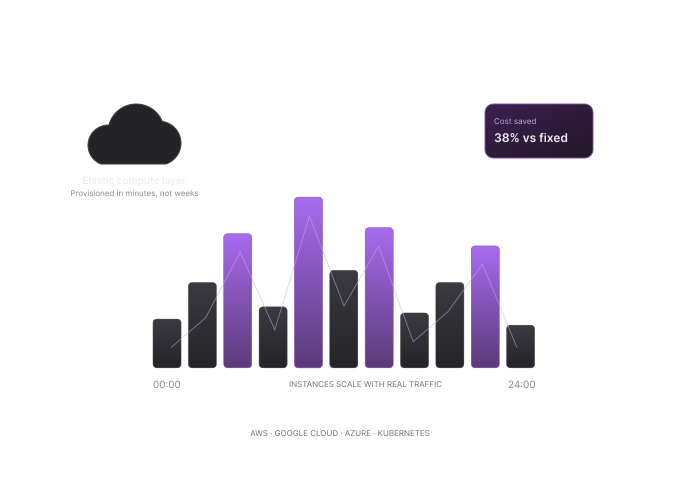
A Structured Approach to Infrastructure Decisions

Cloud & Infrastructure Connects to the Wider Transformation Ecosystem

Cloud Migration & Implementation
Managed Cloud Solutions
Infrastructure Consulting & Setup
Infrastructure as a Service (IaaS) & GPU Infrastructure

1

/4

Cloud Migration & Implementation

A Structured Transition Into Cloud

Learn More

Managed Cloud Solutions

Cloud Environments Managed Around Your Operations

Learn More

Infrastructure Consulting & Setup

Design Infrastructure Around What Your Systems Need

Learn More

Infrastructure as a Service (IaaS) & GPU Infrastructure

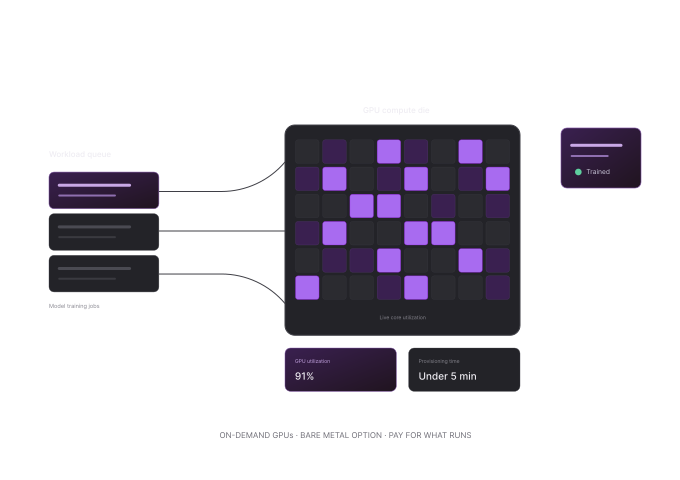
Compute Capacity Built Around Your Workload

Learn More

Cloud Migration & Implementation

A Structured Transition Into Cloud

Learn More

Managed Cloud Solutions

Cloud Environments Managed Around Your Operations

Learn More

Infrastructure Consulting & Setup

Design Infrastructure Around What Your Systems Need

Learn More

Infrastructure as a Service (IaaS) & GPU Infrastructure

Compute Capacity Built Around Your Workload

Learn More

What Better-Fit Infrastructure Can Enable

  • Infrastructure aligned more closely with actual application and workload requirements
  • A clearer basis for choosing between cloud, private and hybrid environments
  • Existing infrastructure retained where it continues to support the business effectively
  • A structured path for modernisation or migration where change is required
  • Better connection between application architecture and the infrastructure supporting it
  • Capacity planned around realistic operating and growth requirements
  • Security, access and control considered within infrastructure architecture
  • Infrastructure capable of supporting changing applications, data and compute requirements
  • Greater clarity around how different technology environments should work together

Cloud & Infrastructure FAQs

We begin with the applications, workloads, data, users, dependencies, security requirements, expected scale and level of operational control required. Those factors help determine whether cloud, private, hybrid or an existing environment is the better fit.

No. Cloud is one infrastructure option. Existing or private infrastructure may remain appropriate for some workloads, while other systems may benefit from cloud or hybrid architecture. The decision should follow the requirement.

Cloud Migration as a Service supports the structured movement of suitable applications, workloads or data from an existing environment into cloud infrastructure. Migration needs to account for application architecture, dependencies, integrations, data and operational requirements rather than focusing only on moving infrastructure.

Cloud Migration as a Service supports the structured movement of suitable applications, workloads or data from an existing environment into cloud infrastructure. Migration needs to account for application architecture, dependencies, integrations, data and operational requirements rather than focusing only on moving infrastructure.

Cloud Migration Consulting Services help establish whether migration is appropriate, what should move, what should remain, the target infrastructure direction and which application, data and operational dependencies need to be addressed before implementation.

Where cloud is an appropriate target environment, Cloud Migration Services can support the assessment, planning and movement of applications or workloads while accounting for their architecture, data, integrations and deployment requirements.

A Cloud Migration Company should understand more than the target platform. The engagement should consider what the application does, what it depends on, how information moves, the required controls and whether migration is actually the right direction for the workload.

Enterprise Cloud Migration requires a clear view of the wider technology environment because applications may depend on multiple systems, data sources, integrations and operating processes. We determine what should move and how those dependencies influence architecture and transition.

Yes. Infrastructure does not have to operate in one environment. Existing systems can remain where they continue to meet workload and control requirements, while other applications may operate in cloud or private environments where appropriate.

AI workloads can introduce specific compute, storage, data and deployment requirements. We begin with what the AI capability needs to run and the control requirements around its information before defining the appropriate infrastructure.

Yes. Application and infrastructure architecture are closely connected. When a new application is being designed, deployment, data, integrations, expected usage and operating requirements can be considered together rather than treating infrastructure as a later decision.

Build the Environment Your Technology Actually Needs

Bring us the applications, workloads or infrastructure requirement you need to support. We will help assess the existing environment, determine what should remain or change and design the infrastructure around what your technology actually needs to run.

Get to Know Us

Meaningful Solution Starts
With a Conversation!