AI Solution Development

Put Intelligence Where Work Happens

We design and implement AI capabilities around defined business use cases, enterprise data, existing systems, and the workflows where people need to use them.

Trusted by startups and enterprises worldwide

AI Becomes Valuable When It Has a Defined Role

The question is no longer whether artificial intelligence can support business operations. It is where intelligence should be applied, what information it needs, and how it will work within the existing technology environment.
Our AI software development services begin with the workflow, information, interaction, or decision that needs to improve. We then assess the available data, determine the right AI approach, and engineer the applications, integrations, controls, and infrastructure required to make it usable.
The result is not AI operating separately from the business. It is a practical capability embedded where work already happens.

Intelligence Built Around the Business

Explore Our Insights

A working AI capability requires more than selecting a model. It needs the right data, business context, system connections, user experience, security controls, and deployment architecture around it.

Where Artificial Intelligence Creates Value

Agentic AI Workflows

Build goal-oriented AI agents that retrieve information, use approved tools, and coordinate defined tasks with appropriate controls and human review.

Custom AI Applications

Develop purpose-built AI applications for document review, information interpretation, decision assistance, and specific operational requirements.

Enterprise Knowledge Assistants

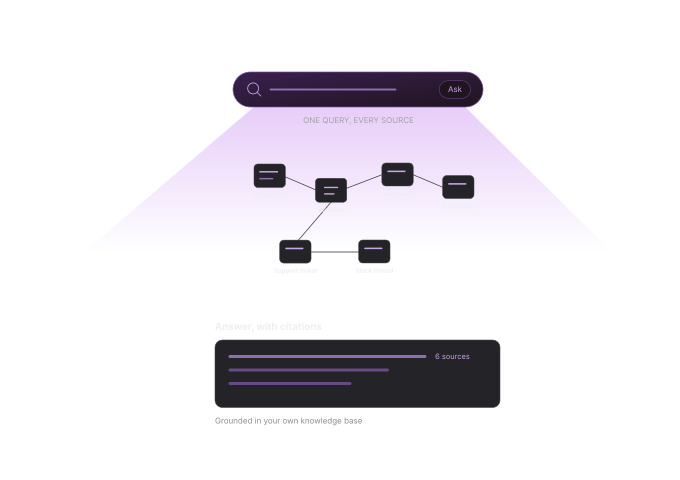
Help authorised teams search, retrieve, and apply relevant information from organisational documents, repositories, and knowledge sources.

Conversational AI Systems

Create conversational experiences for customer support, employee assistance, product guidance, and query resolution, connected with business knowledge and systems.

Intelligent Document and Workflow Processing

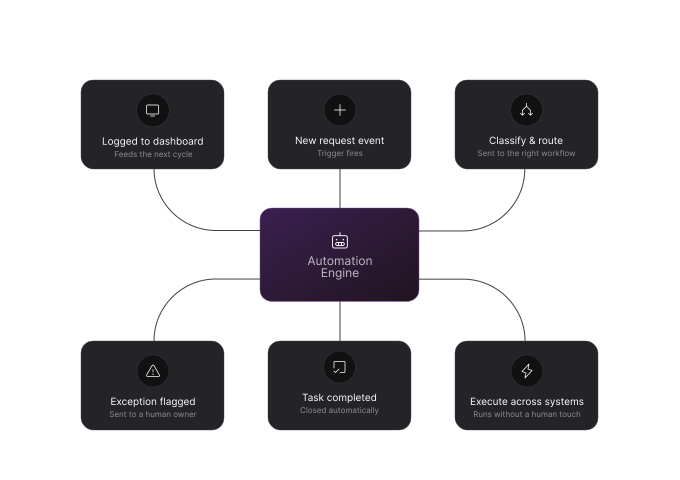
Extract, classify, summarise, and structure information from documents before directing it through defined business rules, reviews, and workflow actions.

AI-Enabled Decision Support

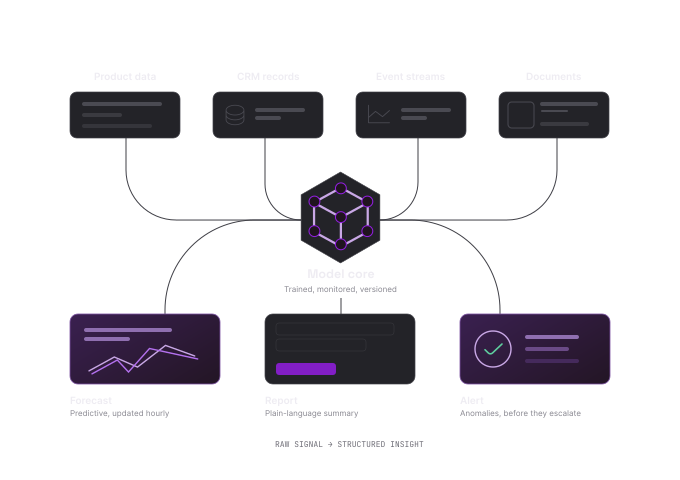
Connect business data, contextual information, and AI-assisted analysis to help teams evaluate situations and make more informed decisions.

From Defined Use Case to Working Capability

Explore Our Insights
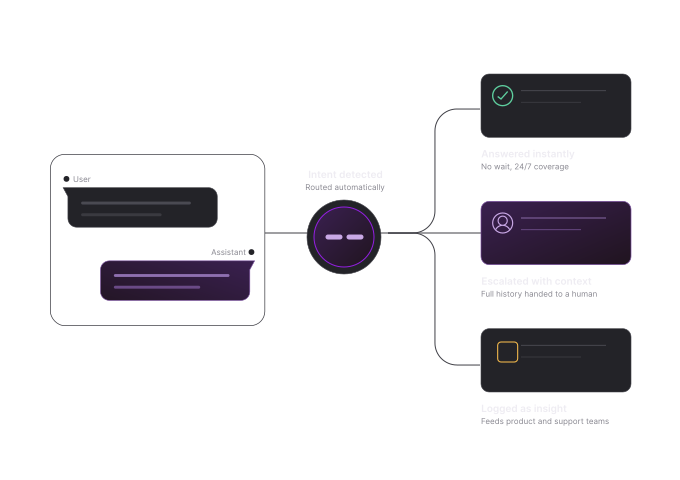
Our approach connects the business requirement with the data, architecture, applications, and operating environment needed to turn AI into something people can use.
Each implementation follows the conditions of the use case. Data readiness, security, integrations, infrastructure, validation, and human responsibility are considered before an AI capability moves into production.

Clarify the workflow, information, interaction, or decision that needs to improve and define the role AI is expected to perform.

Decide whether the requirement needs AI, Generative AI, conventional automation, or a combination, then structure the architecture around the environment.

Develop the model interactions, retrieval mechanisms, application logic, interfaces, and controls required for the intended business use.

Integrate the AI capability with relevant applications, APIs, data sources, business processes, and human review points.

Validate outputs, deploy within the selected infrastructure, and improve the capability as information, usage, and requirements evolve.
From Defined Use Case to Working Capability

Artificial Intelliegnce Connects to the Wider Transformation Ecosystem

Conversational AI & Chatbots
Enterprise Search & Knowledge Systems
Intelligent Workflow Automation

1

/3

Conversational AI & Chatbots

Conversations Built Around What Users Need

Learn More

Enterprise Search & Knowledge Systems

Make Enterprise Knowledge Easier to Find

Learn More

Intelligent Workflow Automation

Bring Intelligence Into Complex Workflows

Learn More
Conversational AI & Chatbots

Conversations Built Around What Users Need

Learn More

Enterprise Search & Knowledge Systems

Make Enterprise Knowledge Easier to Find

Learn More

Intelligent Workflow Automation

Bring Intelligence Into Complex Workflows

Learn More

Enabling More Intelligent Processes and Decisions

  • Business documents organised for AI-assisted interpretation
  • Relevant information made easier for review teams to identify
  • Document patterns surfaced within the diligence workflow
  • AI capability aligned with an information-intensive business requirement
  • Sensitive information considered within the deployment architecture
  • Human review retained within the operating process
  • A structured foundation created for continued validation and improvement

Questions About Applying AI in Your Business

We begin with the work that needs to improve. The workflow, users, information, expected output, operational value, and risks are assessed before deciding whether AI is appropriate.

Yes, where the required systems provide suitable access and integration options. The architecture may connect AI with applications, APIs, databases, documents, and knowledge repositories.

Yes. We design custom AI capabilities together with the application logic, interfaces, integrations, controls, and deployment components required around them.

Yes, subject to the accessibility, quality, permissions, and suitability of the information. We assess how relevant knowledge should be prepared and retrieved.

Data sensitivity, access controls, infrastructure preferences, and security requirements are considered when defining the architecture.

Private or locally controlled deployment may be considered where the selected technologies, infrastructure, use case, and security requirements support it.

We evaluate the wider requirements around data access, integrations, interfaces, validation, security, infrastructure, monitoring, and user adoption.

Conventional automation suits reliable rules. AI becomes relevant when a workflow requires interpretation, contextual understanding, classification, extraction, or assistance with unstructured information.

No. Some requirements are better addressed through software changes, integration, conventional automation, or process redesign.

The architecture follows the use case, data sensitivity, existing systems, infrastructure preferences, access requirements, and the level of operational control required.

Where Should Intelligence Work in Your Business?

Bring us the workflow, information challenge, product requirement, or AI initiative you are evaluating. We will help determine what is feasible, what foundations it requires, and how it can be engineered into practical use.

Get to Know Us

Meaningful Solution Starts
With a Conversation!