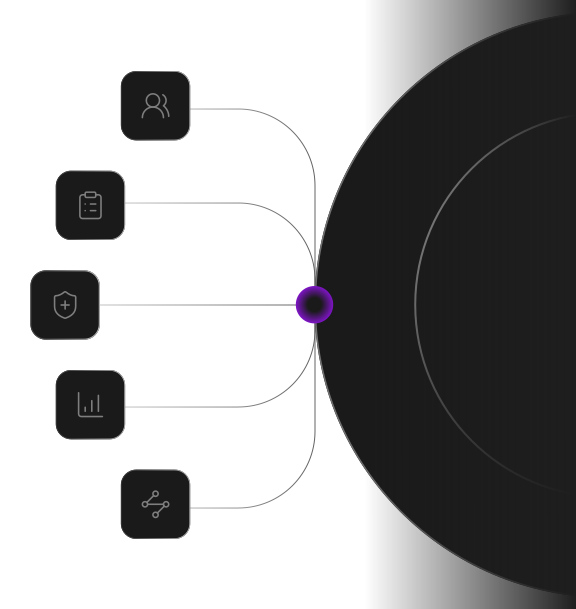
Intelligent Document Processing
Extract, classify, summarise, and structure relevant information from documents before it moves into the next workflow stage.

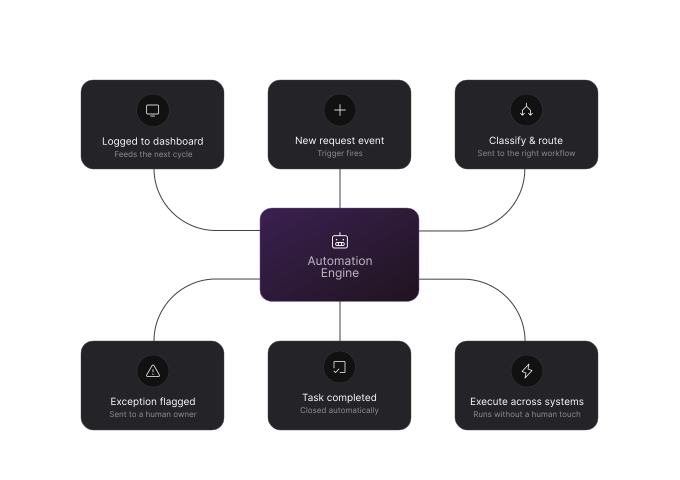
We combine AI, business rules, system integrations, and human oversight to support workflow stages that require more than fixed automation alone.
Conventional automation works well when inputs are
predictable and each action can be governed by a clear rule. It becomes more
limited when a workflow also requires people to read documents, interpret
requests, classify information, or understand context before work can continue.
Our enterprise process automation approach introduces AI
where interpretation is required while retaining deterministic logic for
actions governed by defined rules. Human review remains part of the workflow
where uncertainty, exceptions, or business risk require judgment.
This extends business process automation into
information-intensive work without treating every task or decision as suitable for
AI.
Our approach begins by understanding the complete workflow
rather than introducing AI into an isolated task. We examine the inputs,
decisions, business rules, systems, exceptions, and human responsibilities
involved from beginning to end.
We then design the business workflow automation around three
deliberate roles. AI handles appropriate interpretation, deterministic
automation manages defined actions, and people remain involved where judgment,
approval, or exception handling is necessary.
Map the process, participants, inputs, decisions, rules, system interactions, exceptions, and expected outcome before deciding what should change.
Locate the stages where work depends on reading, classification, extraction, summarisation, contextual understanding, or decision assistance.
Define which cases require review, approval, escalation, correction, or final judgment from an authorised person.
Connect AI capabilities, business logic, APIs, applications, data, and workflow systems within a coherent operating design.
Implement the interpretation, routing, system actions, interfaces, and integrations required to move work through the process.
Review workflow behavior, exceptions, handoffs, and changing requirements to guide continued refinement.
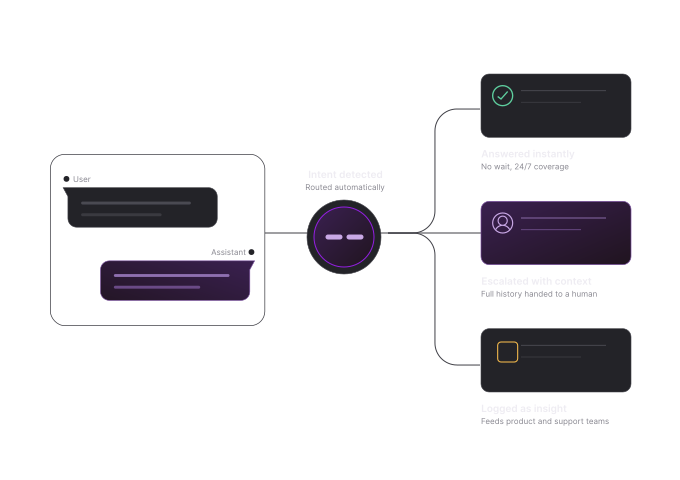
Conversations Built Around What Users Need
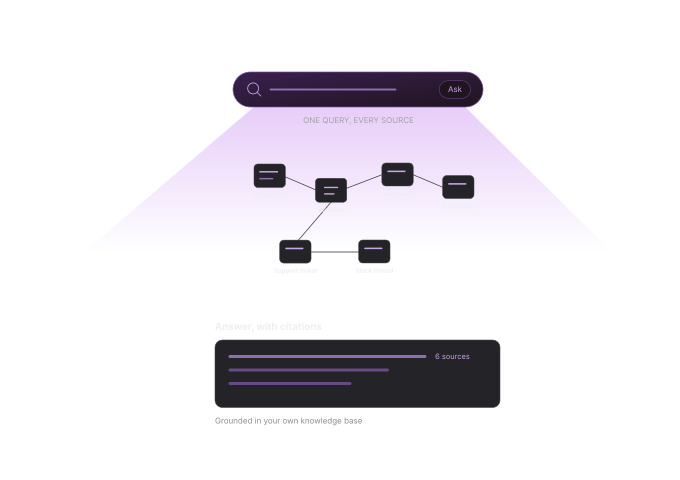
Learn MoreMake Enterprise Knowledge Easier to Find
Learn More
Conversations Built Around What Users Need
Learn More
Make Enterprise Knowledge Easier to Find
Learn MoreShare the workflow, documents, information-processing tasks, or decision points you want to improve. We will help determine what should use AI, what should remain rule-based, where people should stay involved, and how each part can work together as one connected process.