Enterprise Modernization & Automation

Modernise Systems and Workflows Without Disrupting Operations

Modernize systems, connect workflows and introduce automation and intelligence where they can improve how your business actually operates.

Trusted by startups and enterprises worldwide

Modernise Existing Technology Without Replacing Everything

Established enterprises rarely have a technology problem that can be solved by starting over.

Core applications already support critical operations. Business logic sits inside systems built over years. Teams depend on established workflows, integrations and data. Some of that technology may need to change. Much of it may still be doing its job perfectly well.

Enterprise Modernization & Automation helps organisations improve this environment selectively.

Depending on the requirement, that can mean coordinating a wider transformation programme, introducing AI into a defined part of the operation, automating repetitive processes, modernising a restrictive application or improving workflows around ERP and other core business systems.

The goal is not to modernise everything. It is to make the technology estate easier to operate, connect and evolve where the business actually needs it.

Improve the Technology Environment You Already Have

Explore Our Insights

Enterprise technology accumulates for good reasons. Replacing it simply because something newer exists can create as much complexity as it removes.

We focus on areas where the existing environment restricts change, creates unnecessary manual work, or makes systems difficult to connect.

That keeps modernization practical: preserve what works, improve what limits the business and introduce new technology only where it earns its place.

Where Enterprise Modernization & Automation Creates Value

Connect Disconnected Work

Bring applications, workflows and information together where work currently depends on manual movement or disconnected systems.

Modernize What Limits Change

Improve, extend, migrate or rebuild technology where existing systems are becoming difficult to adapt to new requirements.

Automate Repeatable Processes

Structure repetitive activities, approvals, information movement and system-driven tasks while retaining people where judgment is required.

Improve Operational Visibility

Create clearer information flows, reporting and workflow visibility where teams currently depend on fragmented sources or manual consolidation.

Apply Intelligence With Purpose

Introduce AI where a workflow, interaction or information requirement genuinely benefits from interpretation or intelligent assistance.

Build for Continued Change

Create technology foundations that can adapt as processes, applications, users and business requirements continue to evolve.

Decide What to Modernise, Automate or Keep

Explore Our Insights

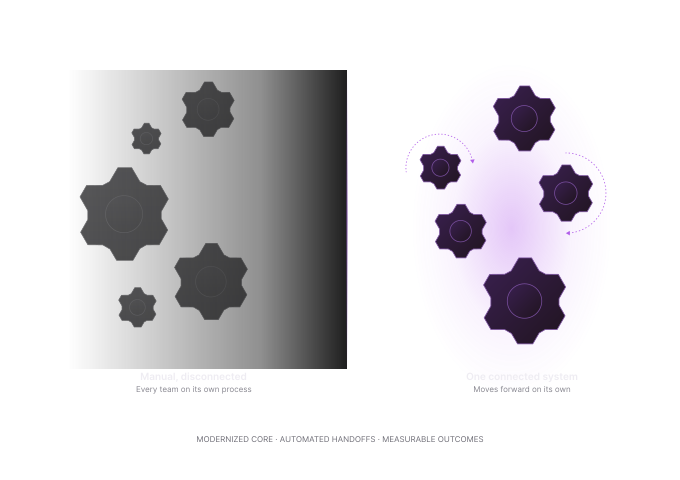
Enterprise technology environments are rarely one clean stack. Important systems have different histories, owners, dependencies and levels of business criticality.

That is why modernization needs judgment before it needs another platform.

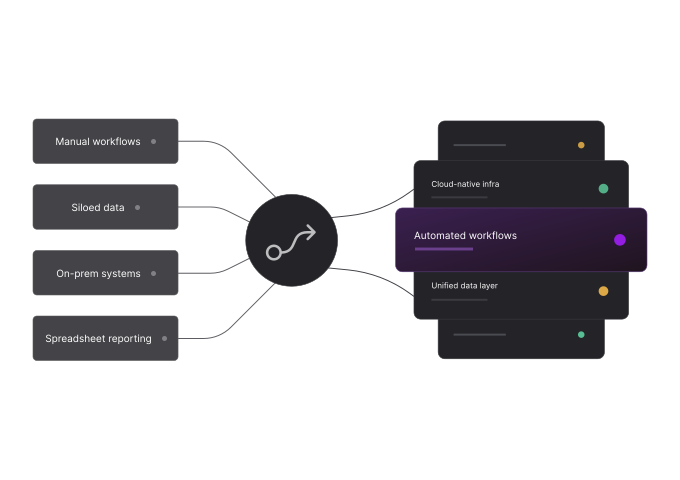
We start with the operating requirement, understand the technology already supporting it and then choose the appropriate path. The requirement may call for broader transformation consulting, automation, AI, system modernization or changes around an existing ERP environment. It does not need to become all of them.

We begin with the business requirement, the workflows involved, the people using them and what needs to work differently.

We examine applications, processes, data movement, integrations, infrastructure and dependencies to understand what should remain and where change is required.

We identify where integration, modernisation, automation, AI or new software can create a practical improvement and determine the dependencies between those changes.

We define how applications, workflows, integrations, data and the underlying technology foundations need to work together before implementation begins.

As processes and requirements change, the technology environment can continue to be improved, extended and automated where the next requirement justifies it.
Decide What to Modernise, Automate or Keep

Enterprise Modernization & Automation Connects to the Wider Transformation Ecosystem

Digital Transformation
AI-Led Digital Transformation
Business Process Automation
ERP Process Digitalisation

1

/4

Digital Transformation

Build the Right Digital Capability for Your Business

Learn More

AI-Led Digital Transformation

Move AI From Experimentation Into Operations

Learn More

Business Process Automation

Automate Repetitive Work Without Losing Control

Learn More

ERP Process Digitalisation

Digitise ERP Processes Across Systems

Learn More
Digital Transformation

Build the Right Digital Capability for Your Business

Learn More

AI-Led Digital Transformation

Move AI From Experimentation Into Operations

Learn More

Business Process Automation

Automate Repetitive Work Without Losing Control

Learn More

ERP Process Digitalisation

Digitise ERP Processes Across Systems

Learn More

What Enterprise Modernization Can Improve

  • Systems and workflows working together with fewer disconnected handoffs
  • More structured operational processes across teams and applications
  • Less repetitive manual activity where automation is appropriate
  • Existing technology retained where it continues to serve the business
  • Modernised applications where current systems restrict necessary change
  • Clearer movement of information across workflows and business systems
  • Better visibility into relevant processes, information and operational activity
  • Automation designed around rules, approvals, exceptions and human involvement
  • AI introduced where intelligence has a defined role within the workflow
  • A technology environment better prepared to evolve with changing business requirements

Enterprise Modernization & Automation FAQs

Enterprise Modernization & Automation brings together the different ways an organisation can improve its existing technology and operational environment. This can include transformation consulting, automation, AI-enabled change, legacy modernization, systems integration and improvements around ERP-centred workflows depending on the requirement.

Enterprise Modernization & Automation is the broader service family covering different modernization and automation requirements. Digital Transformation is one path within it. It becomes relevant when leadership needs to define and coordinate wider change across systems, processes, technology priorities and implementation rather than address one clearly defined modernization or automation requirement.

No. A system being older does not automatically make it unsuitable. The question is whether it continues to support the business effectively. Existing technology may be retained, integrated, extended, re-engineered or migrated depending on what the requirement justifies.

Automation can be considered for repeatable and rule-driven activities such as information movement, routine processing, approvals, validations, notifications, reporting and cross-system workflows. The appropriate design depends on the rules, exceptions, systems and human decisions involved in the process.

AI becomes relevant where a workflow needs interpretation, knowledge access, intelligent assistance or decision support that conventional rules alone cannot provide effectively. AI-Led Digital Transformation addresses those requirements in greater depth.

Yes. A defined system, workflow or process can often be improved without changing the entire enterprise environment. The scale of modernization should follow the scale and dependencies of the requirement.

Yes. Modernisation can involve integration, migration, re-engineering, replatforming or phased replacement depending on the system and its dependencies. The appropriate path should reflect operational risk and what the business actually needs from the system.

Yes, where technically appropriate. ERP and other core systems can remain central to the operating environment while integrations, complementary applications or workflow automation improve how work happens around them.

Start with the work itself. If the process primarily follows predictable rules, Business Process Automation may be sufficient. If it also requires interpretation, contextual understanding or intelligent assistance, an AI-led approach may be more appropriate.

Yes, where the application or workload requires them. Infrastructure should change because the system needs a different operating environment, not simply because a modernization initiative is underway.

You do not need to select the technology path before the conversation. Start with the system, workflow or operating requirement that needs to improve. From there, we can determine whether the requirement is primarily transformation consulting, AI-led change, process automation, legacy modernization or ERP and workflow automation.

Start With What Needs to Change

You do not need to decide whether the answer is consulting, automation, modernization or AI first. Bring us the system, workflow or operating requirement that needs to work better, and we will help identify the most appropriate path forward.

Get to Know Us

Meaningful Solution Starts
With a Conversation!