Digital Transformation

Build the Right Digital Capability for Your Business

From improving an existing product to digitising a process or creating something new, we help define and implement the technology that fits the business goal.

Trusted by startups and enterprises worldwide

Every Business Need Can Open a Path to Transformation.

You do not need to arrive with a complete technology brief.

You may already know exactly what you want to build. You may have an existing application that needs to perform better or support the business more effectively. You may want to digitise a process, create a new customer or employee experience, launch a digital product or simply explore whether an idea can become a viable digital capability.

Our approach to Digital Transformation starts from that requirement.

We understand what the business is trying to achieve, assess what already exists where relevant and determine the technology, architecture and implementation approach that best fits the need.

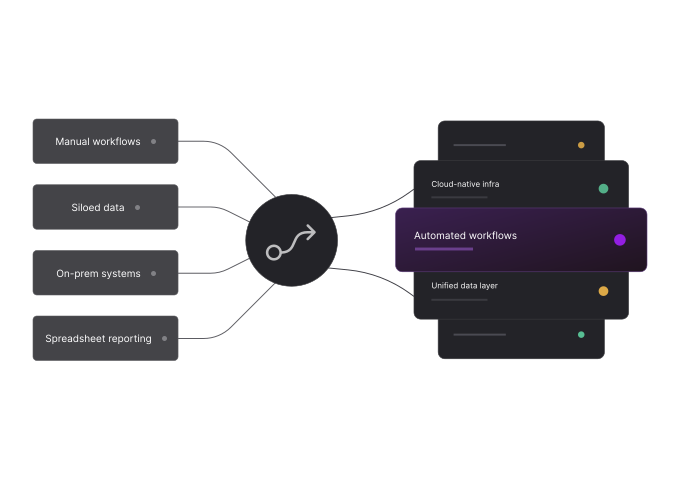
Sometimes the right decision is to improve what you already have. Sometimes it is to integrate, modernise or automate. And sometimes it makes more sense to build something new.

The technology follows the business requirement, not the other way around.


Make Better Digital Technology Decisions

Explore Our Insights

A business goal can usually be approached through more than one technology route.

An existing platform may work with the right improvements. A specific requirement may justify custom software. Integration may solve a problem without adding another application. Or a new idea may need to be shaped into a focused digital product before significant investment begins.

We bring business context and engineering thinking into these decisions so the technology is appropriate for what needs to be achieved, practical to implement and proportionate to the value it needs to create

Where Transformation Creates Business Value

Align Change With Business Priorities

Define technology changes around what the organisation needs to improve, enable or operate differently.

Connect Fragmented Initiatives

Bring applications, processes, integrations, data and technology decisions into a more coherent transformation direction.

Modernise Selectively

Retain technology that continues to serve its purpose and change what creates genuine operational or technical constraints.

Work With the Existing Environment

Account for systems, data, infrastructure, dependencies and investments already supporting the business before introducing something new.

Move From Direction to Execution

Translate transformation priorities into architecture, implementation and integration rather than allowing strategy to stop at recommendations.

Design Change for Real Use

Consider the teams, users and workflows affected so new technology can become part of how the organisation actually operates.

From Current Operations to Practical Transformation

Explore Our Insights

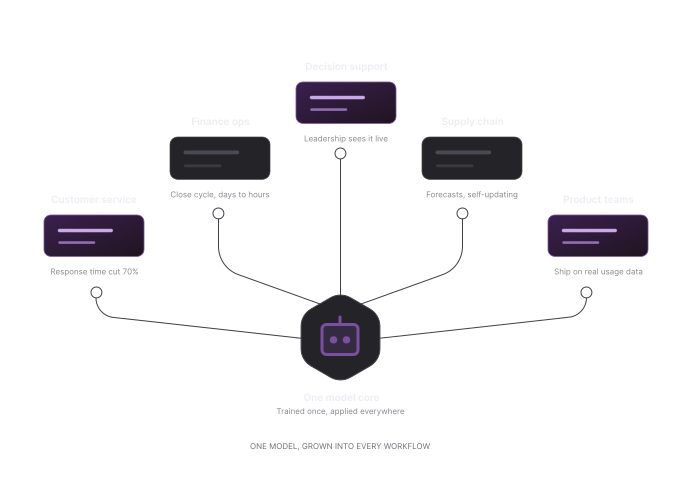
Transformation starts by understanding what the business needs to operate differently and how the current technology environment supports or constrains that requirement.

We then determine the changes that matter, understand how they depend on one another and translate them into an implementation direction. This keeps transformation connected across operations, architecture and engineering rather than treating each technology initiative separately.

Clarify what needs to improve across the operation, the outcomes the organisation is working toward and the processes, teams or capabilities affected.

Examine relevant processes, applications, information, integrations, infrastructure and dependencies to understand what already works and where genuine constraints exist.

Determine what should be retained, integrated, modernised, automated, replaced or newly built and establish the dependencies and sequence between those decisions.

Translate the direction into architecture and implementation, connect the required systems and workflows, support practical adoption and continue evolving the environment as requirements change.
From Current Operations to Practical Transformation

Digital Transformation Connects to the Wider Transformation Ecosystem

AI-Led Digital Transformation
Business Process Automation
ERP Process Digitalisation

1

/3

AI-Led Digital Transformation

Move AI From Experimentation Into Operations

Learn More

Business Process Automation

Automate Repetitive Work Without Losing Control

Learn More

ERP Process Digitalisation

Digitise ERP Processes Across Systems

Learn More
AI-Led Digital Transformation

Move AI From Experimentation Into Operations

Learn More

Business Process Automation

Automate Repetitive Work Without Losing Control

Learn More

ERP Process Digitalisation

Digitise ERP Processes Across Systems

Learn More

What Connected Transformation Can Enable

  • Technology priorities aligned more closely with business and operational requirements
  • A clearer view of what should remain, change or be introduced
  • Better connection between applications, workflows, information and technology foundations
  • Modernisation focused on genuine constraints rather than unnecessary replacement
  • Transformation initiatives structured around their dependencies rather than implemented in isolation
  • More consistent information movement across relevant systems and processes
  • Technology changes designed around the people and teams expected to use them
  • A practical path from transformation direction into implementation and continued evolution

Digital Transformation FAQs

Digital Transformation means improving how technology, systems, processes, information and people work together to support the way the business needs to operate. It is not defined by adopting a particular platform or technology.

Our digital transformation consulting services help organisations understand their current operating and technology environment, identify transformation priorities, determine what should remain or change, define the required technology direction and connect that thinking with implementation.

Technology Consulting primarily helps organisations assess their technology environment, architecture and future direction before major decisions are made. Digital Transformation takes a broader operational change requirement and connects the necessary process, system and technology changes through planning and execution. Broader business transformation consulting services may extend beyond technology, while this page remains focused on the technology-enabled operating environment.

No. Existing systems may remain where they continue to support the business appropriately. Depending on the requirement, technology may be retained, integrated, extended, modernised, automated around or replaced.

Depending on the business requirement, digital transformation solutions can involve process modernisation, application modernisation, systems integration, data and visibility improvements, automation, custom software or changes to cloud and infrastructure environments.

We consider the business priority, current operational constraints, system dependencies, implementation requirements and the relationship between different technology changes before determining priorities and sequencing.

Yes. Transformation does not have to mean changing the complete technology environment at once. Priorities can be implemented progressively according to business requirements, dependencies and the practical realities of the existing operation.

They are introduced where the transformation requirement genuinely calls for them. Automation may support defined process changes, while AI may support appropriate information, interaction or decision requirements. Their dedicated use cases are addressed more deeply within the relevant specialist services.

A digital transformation consultant should consider the people, roles and workflows affected by technology change. Technology needs to work within the responsibilities and processes of the teams expected to use it, so adoption should be treated as part of the transformation direction rather than a separate afterthought.

A Digital Transformation Consulting Company should be able to connect direction with architecture and practical execution. SumCircle's approach links transformation priorities with engineering, integrations, automation, AI, data or infrastructure changes where the actual requirement calls for them.

Bring Us the Goal Before the Technology

Come with a defined requirement, an existing digital product or simply an idea you want to explore. We will help determine the right technology direction and what it will take to turn it into a stronger digital capability.

Get to Know Us

Meaningful Solution Starts
With a Conversation!