AI-Led Digital Transformation

Move AI From Experimentation Into Operations

Redesign workflows around practical AI, connected data and existing systems so intelligence becomes part of how work actually gets done.

Trusted by startups and enterprises worldwide

Put AI Inside the Work, Not Beside It

Experimenting with AI is different from making it useful within an operating business.

For AI to become part of everyday operations, it needs a defined role within a workflow, access to the right information, integration with relevant systems and clear boundaries around where people remain involved.

We help organizations identify where intelligence can materially improve a process, interaction or decision and then connect the required AI capability with the data, applications and workflows around it.

Where AI software development services are required, the technology is engineered as part of the wider operating environment rather than introduced as another isolated AI tool.

Make AI Operational Where It Matters

Explore Our Insights

AI-led transformation should not begin with pressure to use AI across the organization.

It begins by finding the parts of the operation where intelligence can genuinely change how work is performed. That may involve helping people access information, supporting decisions, interpreting business content, improving interactions or automating appropriate parts of a workflow.

We connect those opportunities with the data, systems and human responsibilities required to make AI usable beyond experimentation.

How AI-Led Digital Transformation Delivers Real Business Value

Move Beyond Isolated Pilots

Connect promising AI use cases with the workflows, systems and operational requirements required for everyday use.

Start With the Workflow

Identify what needs to improve in the process before deciding what AI capability or technology belongs within it.

Build on Relevant Data

Understand what information AI needs, where it resides and whether it is sufficiently accessible, usable and governed for the intended requirement.

Connect AI With Existing Systems

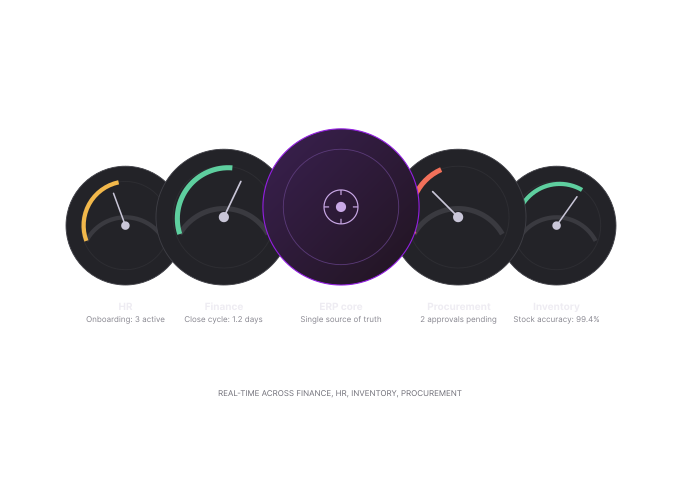
Integrate intelligence with the applications, knowledge environments and business systems where people already work.

Define Human and AI Roles

Determine where AI should assist, automate or provide information while retaining human judgment, review or approval where the requirement calls for it.

Design for Operational Adoption

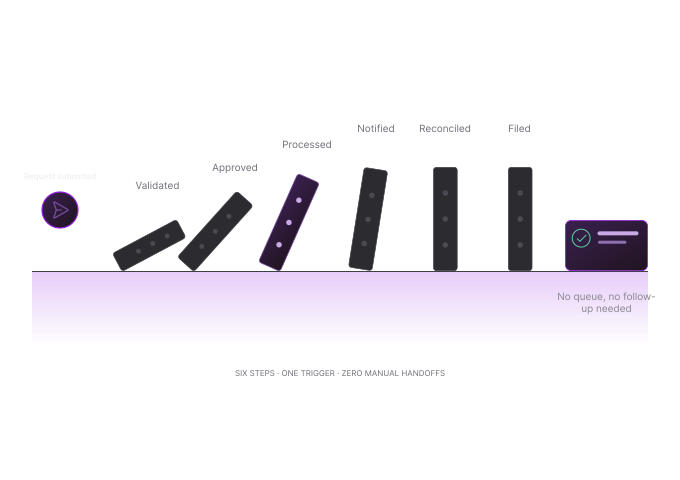
Move beyond demonstrations by considering how AI will be accessed, integrated, controlled and used as part of the real operating workflow.

From AI Opportunity to Operational Capability

Explore Our Insights

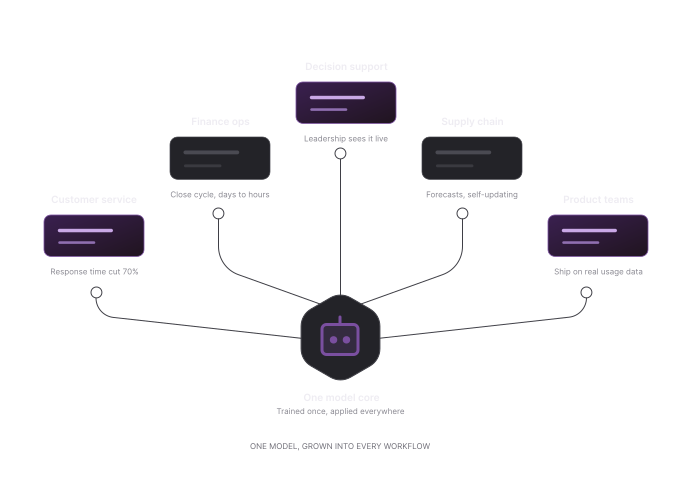
AI transformation begins by understanding the work that needs to improve.

We examine the workflow, information involved, people and systems around it before defining where intelligence could contribute. Data readiness, integration requirements and human responsibility then shape the AI approach and how it becomes part of the wider operating environment

This keeps the transformation focused on improving work rather than implementing AI simply because the technology is available.

Identify the process, interaction, information requirement or decision where intelligence could make a practical difference and clarify what the business needs to improve.

Examine the relevant data, knowledge sources, applications, integrations and operating constraints required to support the AI-enabled workflow.

Define how people, AI and existing systems should interact, including where AI assists, where automation is appropriate and where human review or judgment remains important.

Develop the required capability, connect it with the relevant systems and information, validate it within the intended workflow and refine it as operational requirements evolve.
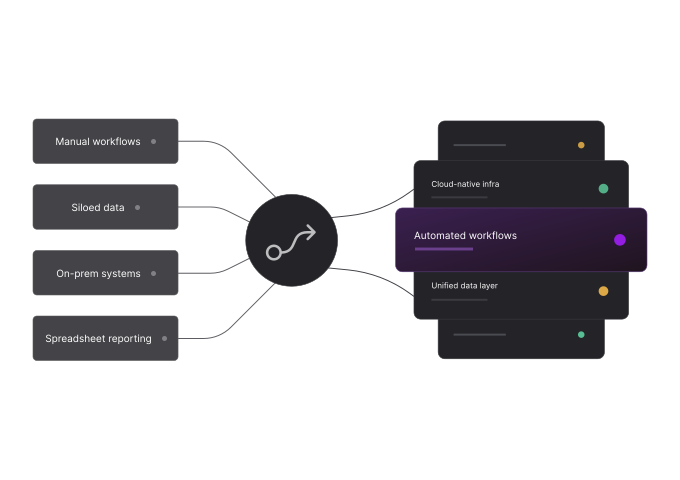
From AI Opportunity to Operational Capability

AI-Led Digital Transformation Connects to the Wider Transformation Ecosystem

Digital Transformation
Business Process Automation
ERP Process Digitalisation

1

/3

Digital Transformation

Build the Right Digital Capability for Your Business

Learn More

Business Process Automation

Automate Repetitive Work Without Losing Control

Learn More

ERP Process Digitalisation

Digitise ERP Processes Across Systems

Learn More

Digital Transformation

Build the Right Digital Capability for Your Business

Learn More

Business Process Automation

Automate Repetitive Work Without Losing Control

Learn More

ERP Process Digitalisation

Digitise ERP Processes Across Systems

Learn More

What Operational AI Can Enable

  • AI connected to defined business workflows rather than operating as an isolated tool
  • Clearer identification of where intelligence can contribute to processes, decisions or interactions
  • Relevant business information made available to support appropriate AI use cases
  • AI capabilities connected with existing applications and technology environments
  • Human responsibility retained where judgment, review or control remains important
  • More structured movement from AI experimentation toward operational implementation
  • AI-enabled workflows designed around actual users and operating requirements
  • A technology environment capable of evolving as AI capabilities and business requirements develop

AI-Led Digital Transformation FAQs

AI-Led Digital Transformation is the use of AI to improve or redesign appropriate business workflows, interactions and decision environments. It involves more than introducing an AI tool because the required data, systems, integrations, human responsibilities and adoption model also need to work together.

Digital Transformation addresses broader change across processes, systems and technology. AI-Led Digital Transformation focuses specifically on where AI can change or improve how parts of the organisation operate.

AI-Led Digital Transformation starts with how workflows or operating models could change through AI. AI Solution Development is more specifically concerned with AI software development and artificial intelligence software development for a defined application or capability. Where transformation identifies a specific AI solution requirement, the two capabilities can naturally connect.

We begin with the business priority and the workflow involved. We identify what needs to improve, where intelligence could contribute and what information, applications and human involvement the use case requires before determining the technology approach.

No. Some requirements may be better addressed through conventional automation, integration, process redesign or existing software capabilities. AI should be introduced where the nature of the work genuinely benefits from intelligence.

AI depends on relevant information. We consider what data or knowledge is required, where it exists, whether it can be accessed appropriately and how its quality and governance affect the intended use case before AI becomes part of the workflow.

Where technically appropriate, yes. AI can be connected with existing applications, knowledge environments and workflows through suitable integration. AI application development services may become relevant where the transformation requires a dedicated application or interface around that capability.

No. We determine where AI should assist, where specific activities can be automated and where people should continue making decisions or reviewing outputs. The balance depends on the workflow, risk, information and business requirement.

Yes, where the underlying use case is appropriate. We can assess how the pilot relates to real workflows, data, applications, integration requirements and user responsibilities and determine what AI software development solutions are required to move toward an operational capability.

A Custom AI Development Company should understand the workflow, information, existing systems and operating controls around the AI use case, not only the model or interface. The implementation should connect intelligence with the real environment in which people and systems need to use it.

Put AI Where It Can Improve the Work

Bring us the workflow, decision or operational requirement you believe AI could improve. We will help determine where intelligence belongs and what data, systems and implementation are required to make it work in practice.

Get to Know Us

Meaningful Solution Starts
With a Conversation!