ERP Process Digitalisation

Digitise ERP Processes Across Systems

Connect approvals, data movement, surrounding systems and repeatable workflow steps around the ERP environment your business already depends on.

Trusted by startups and enterprises worldwide

Connect ERP Workflows Across Teams and Systems

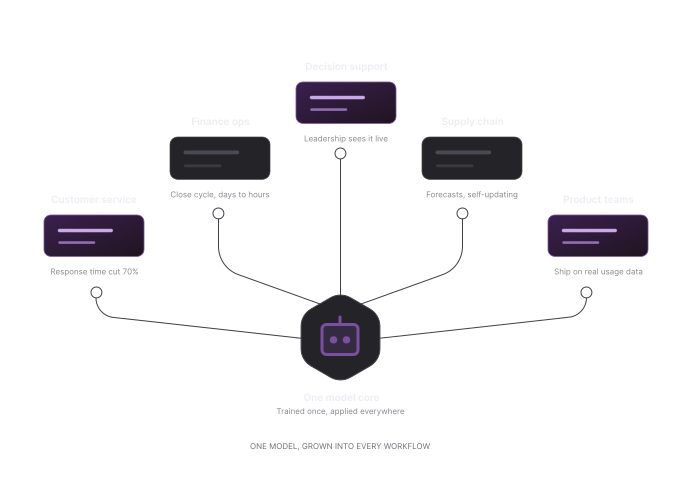
An ERP may manage the core transaction, while the wider business process still moves through several other steps and systems.

A request may begin through a form or another application. Supporting information may arrive separately. Approvals may sit in email. Teams may export ERP data into spreadsheets before the next activity can happen. Reporting may depend on information collected from multiple systems.

That leaves the ERP process only partly digital.

ERP Process Digitalisation connects these activities into a more structured process around the ERP.

We understand what the ERP already handles effectively, identify where the process moves outside it, and determine where digital workflows, integrations, applications, approvals, or reporting capabilities can improve how the full process operates.

The goal is straightforward: make ERP-linked work easier to manage across the systems and people already involved.

Improve ERP Process Efficiency

Explore Our Insights

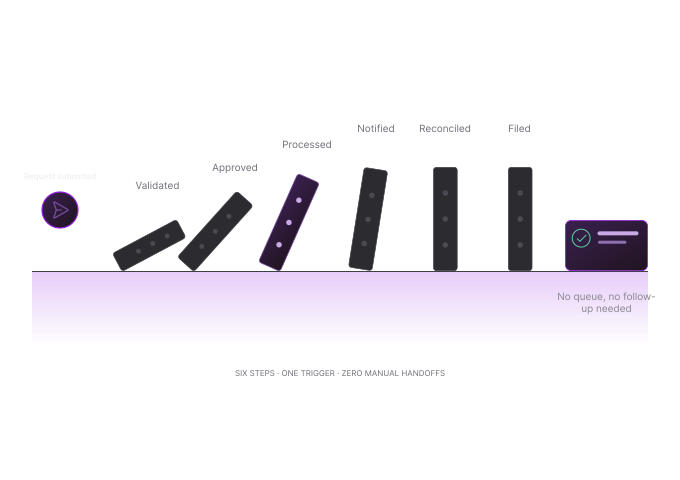
ERP process digitalisation creates value when work can move through the business with fewer manual handoffs and clearer control.

That can mean capturing information digitally before it enters the ERP, connecting data between systems, structuring approvals, giving teams a simpler interface for specific activities, or making the status of an ERP-linked process easier to see.

Not every process step needs automation, and not every requirement needs to be built into the ERP itself.

The right approach digitises the process around the existing environment while keeping business rules, controls, and human decisions where they belong.

Where ERP Process Digitalisation Creates Business Value

Digital Workflows

Bring appropriate requests, forms, approvals, and process steps into a structured digital workflow instead of relying on separate manual coordination..

Connected Data

Reduce repeated data entry, exports, and manual information transfer where ERP and surrounding systems can exchange information appropriately.

Approval Controls

Structure approvals, authorisations, exceptions, and escalations so responsibility remains clear throughout the process.

System Integration

Connect ERP with relevant business applications through suitable APIs and integrations where information or actions need to move between systems.

Complementary Apps

Build focused applications, forms, or interfaces where users need functionality around the ERP without forcing every requirement into the core platform.

Process Visibility

Give relevant teams clearer visibility into status, ownership, pending actions, and exceptions across the ERP-linked process.

Mapping the ERP Process Before Digitising It

Explore Our Insights

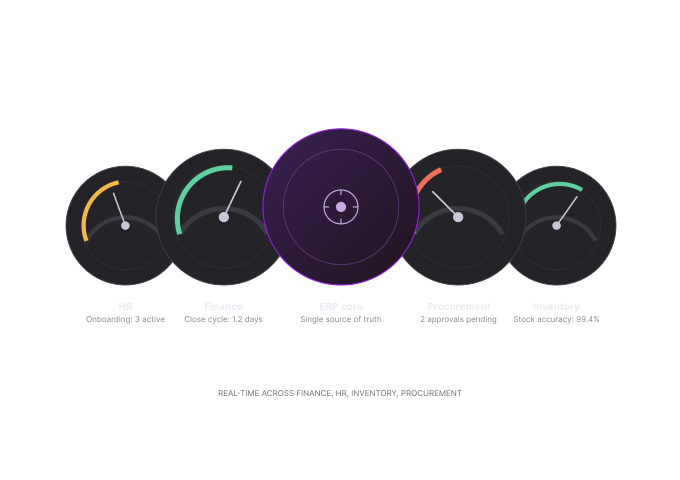
ERP process digitalisation starts with understanding how the process currently works.

We look at where it begins, which teams participate, what the ERP handles, what information moves between systems, where approvals occur, and which activities still depend on manual intervention.

That gives us a clear basis for deciding what should remain in the ERP, what needs to connect with it, and where a digital workflow or complementary application is the better fit.

Identify which parts of the process the ERP already handles effectively and where important activities take place outside the core system.

Tracing users, activities, data, approvals, systems and decision points to understand how work moves across the wider ERP-linked process.

Determining which manual steps should become digital, where integration is required and where workflow logic, automation or complementary software adds practical value.

Building the required workflows, APIs, interfaces, applications and system interactions around the agreed process architecture.

Testing roles, authorisations, standard flows, exceptions and cross-system behaviour so the digital process reflects how the operation actually needs to work.
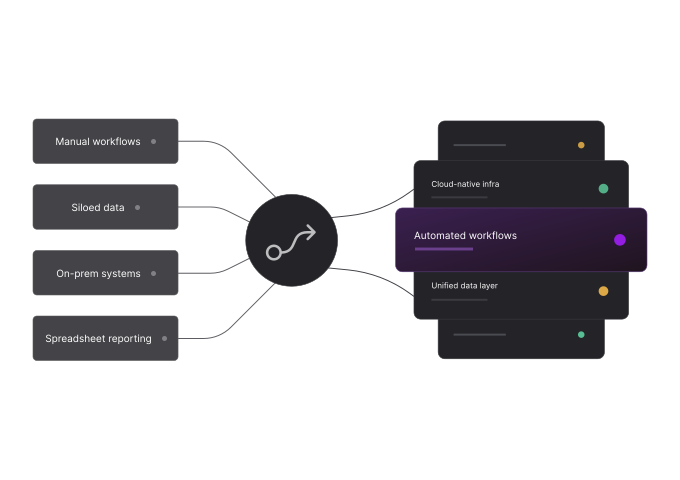
Mapping the ERP Process Before Digitising It

ERP Process Digitalisation Connects to the Wider Transformation Ecosystem

Digital Transformation
AI-Led Digital Transformation
Business Process Automation

1

/3

Digital Transformation

Build the Right Digital Capability for Your Business

Learn More

AI-Led Digital Transformation

Move AI From Experimentation Into Operations

Learn More

Business Process Automation

Automate Repetitive Work Without Losing Control

Learn More

Digital Transformation

Build the Right Digital Capability for Your Business

Learn More

AI-Led Digital Transformation

Move AI From Experimentation Into Operations

Learn More

Business Process Automation

Automate Repetitive Work Without Losing Control

Learn More

What Better-Connected ERP Workflows Can Enable

  • More ERP-linked activities managed through defined digital workflows
  • Less reliance on spreadsheets and email for suitable process steps
  • Reduced repeated information handling between connected applications
  • More structured approval and authorisation processes
  • Better interaction between ERP and surrounding business systems
  • Business-specific requirements supported without unnecessary ERP-core changes
  • Better visibility into process status, ownership, and outstanding activity
  • Complementary applications introduced where existing systems cannot support a required workflow cleanly
  • A more adaptable operating environment as processes and system requirements evolve

ERP Process Digitalisation FAQs

ERP Process Digitalisation means turning manual, fragmented, or disconnected activities within an ERP-linked business process into a more structured digital workflow. This can involve digital data capture, approvals, integrations, workflow logic, complementary applications, reporting, and appropriate automation while keeping the ERP at the centre where it continues to serve the process effectively.

No. We first understand what the existing ERP already handles effectively. In many situations, the better approach is to digitise, integrate, or improve the processes around the ERP rather than replace the core system.

ERP-linked processes can exist across finance, procurement, operations, inventory, administration, and other business functions. The opportunity usually exists where parts of the process still depend on manual information movement, spreadsheets, approvals, disconnected applications, or separate tracking.

Custom ERP software or complementary applications may become relevant when business-specific workflows, approvals, roles, reporting requirements or system interactions cannot be supported appropriately through the existing environment alone.

Yes, where technically appropriate. APIs and system integrations can connect the ERP with other relevant applications when information or actions need to move between them as part of the workflow.

Where the requirement justifies it, yes. A role-specific application, digital form, workflow interface, or complementary operational application may provide a cleaner way to support a business requirement than adding unnecessary customisation inside the ERP itself.

We examine the process, rules, approvals, systems, information requirements and exceptions first. Predictable and repeatable activity may be suitable for automation, while approvals, exceptions and judgment-based decisions may remain with people.

ERP software development in the context of this page focuses on custom functionality, integrations or workflow systems needed around a business's operational requirements. We do not position this service as generic ERP product implementation or claim expertise with specific ERP platforms unless that capability is separately verified.

Not necessarily. A search for an ERP developer may begin with a requirement that is actually better solved through workflow redesign, APIs, integration or a complementary application. We first establish where the change belongs before deciding what needs to be developed.

Business Process Automation addresses repetitive and rule-driven processes more broadly across the organisation. ERP & Workflow Automation focuses specifically on workflows centred around ERP and other core operational systems, including the applications, approvals and information flows connected to them.

Discuss Your ERP Process Digitalisation Requirement

Show us the ERP-linked process you want to improve, the systems involved, and where work still moves manually. We will help determine what should stay in the ERP, what should connect with it, and what needs a better digital process around it.

Get to Know Us

Meaningful Solution Starts
With a Conversation!