Business Process Automation

Automate Repetitive Work Without Losing Control

Redesign repetitive and rule-driven processes around connected workflows, systems and data while keeping people involved where judgment and exceptions still matter.

Trusted by startups and enterprises worldwide

Make Repetitive Processes Easier to Run

Important business processes often move across people, spreadsheets, emails and multiple applications. When the same information has to be entered, transferred, checked or followed up repeatedly, the process can become harder to manage as operations grow.

Our business process automation solutions begin by understanding how the complete process works, including its tasks, rules, decisions, exceptions, systems and information flows.

We then identify where business process automation can remove unnecessary repetitive activity, connect systems more effectively and create a more structured workflow without taking away the controls and human decisions the process still needs.

Keep Business Processes Moving With Less Manual Coordination

Explore Our Insights

Good automation does more than make individual tasks faster. It improves how the complete process moves from one activity to the next.

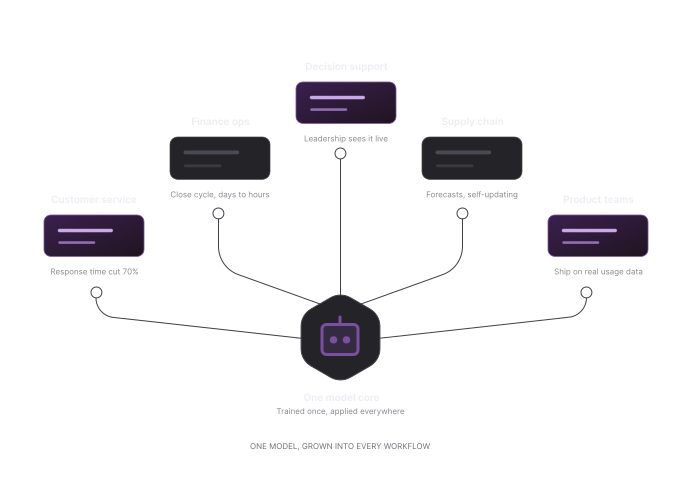
We look at where work repeats, where information changes hands manually, where predictable activities depend on follow-ups and where disconnected systems interrupt the workflow.

The right workflow automation solutions can then handle predictable activity while making responsibilities, exceptions and human intervention clearer throughout the process.

How Business Process Automation Delivers Real Business Value

Reduce Repetitive Activity

Automate predictable data handling, routing, notifications and administrative steps where repeated manual involvement adds little value.

Improve Workflow Consistency

Structure recurring processes around defined rules, responsibilities and system actions so work follows a clearer operating path.

Connect Work Across Systems

Use integrations where processes currently depend on people transferring information or triggering actions manually between applications.

Keep Exceptions Visible

Design workflows so unusual cases, missing information and activities requiring intervention remain visible rather than becoming hidden inside automation.

Preserve Human Decisions

Keep approvals, judgment and higher-impact decisions with the appropriate people instead of automating them simply because automation is technically possible.

Improve Process Visibility

Make status, ownership, pending actions and intervention requirements easier to understand across the workflow.

Understanding Every Step, Decision and Exception

Explore Our Insights

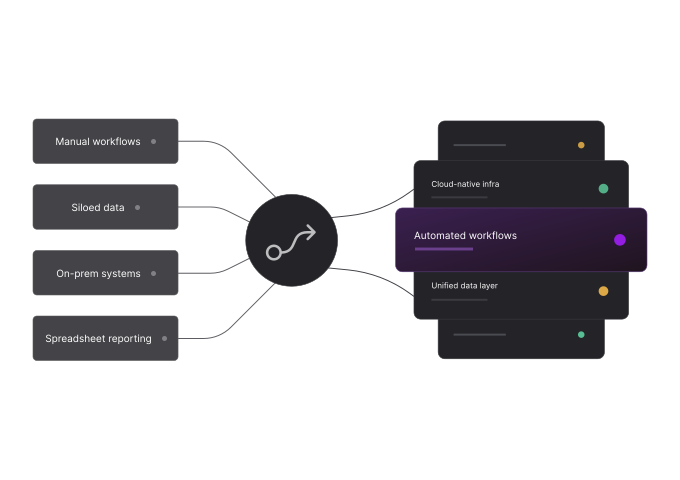
Automating an inefficient process exactly as it exists can simply make the same complexity move faster.

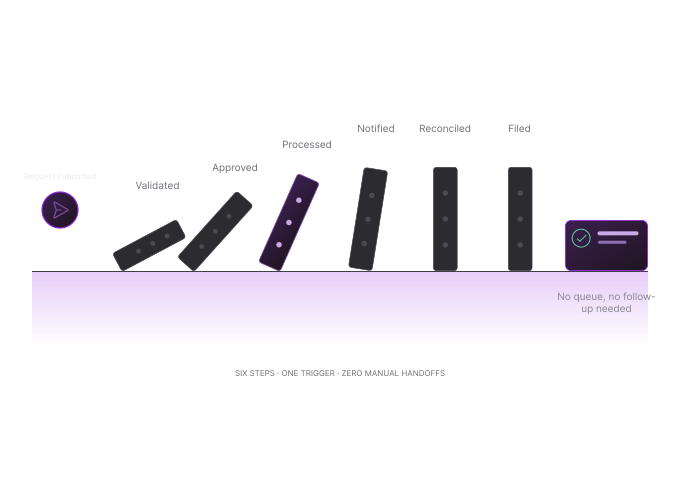
Our approach to business workflow automation begins by understanding how work moves from beginning to end, which activities repeat, where decisions occur, what information is required, which systems participate and what happens when the process does not follow the standard path.

This creates the basis for automation that improves the workflow rather than adding another technology layer around it.

Map the workflow from the initial requirement through its tasks, responsibilities, information movement and intended outcome.

Understand which activities follow predictable logic, where approvals occur, what exceptions exist and where human intervention remains necessary.

Identify repetitive data handling, routine routing, system actions, notifications, approvals and other activities where automation can simplify the process.

Determine how applications, APIs and data need to interact so automation can move work across the process without creating another isolated system.

Implement the required workflow logic, controls and integrations and validate how standard cases, exceptions and human interactions work together.

Review how the automated workflow performs in practice and refine it as processes, rules, systems and operational requirements evolve.
Understanding Every Step, Decision and Exception

Business Process Automation Connects to the Wider Transformation Ecosystem

Digital Transformation
AI-Led Digital Transformation
ERP Process Digitalisation

1

/3

Digital Transformation

Build the Right Digital Capability for Your Business

Learn More

AI-Led Digital Transformation

Move AI From Experimentation Into Operations

Learn More

ERP Process Digitalisation

Digitise ERP Processes Across Systems

Learn More
Digital Transformation

Build the Right Digital Capability for Your Business

Learn More

AI-Led Digital Transformation

Move AI From Experimentation Into Operations

Learn More

ERP Process Digitalisation

Digitise ERP Processes Across Systems

Learn More

What Better-Structured Automation Can Enable

  • Less dependence on repetitive manual activity within appropriate workflows
  • More structured execution of recurring operational processes
  • Clearer movement of information between relevant systems and teams
  • Predictable activities handled through defined automation rules
  • Human review retained where judgment, approval or exception handling is required
  • Better visibility into process status, ownership and required intervention
  • Better visibility into process status, ownership and required intervention
  • Reduced dependence on spreadsheets, email handoffs and repeated system activity where appropriate
  • Automation that can evolve as processes, systems and business requirements change

Business Process Automation FAQs

Business process automation uses technology to handle appropriate repetitive, predictable and rule-driven activities within a business process. This can include workflow routing, information movement, system actions, notifications, approvals and other recurring tasks.

Processes with clearly understood steps and repeatable activities are often suitable candidates. Business automation solutions can support data handling, routine approvals, cross-system workflows, notifications and triggers, document-driven processes, recurring reporting and process tracking where the rules are sufficiently defined.

We map the complete process and identify its activities, rules, systems, information requirements, exceptions and decision points. For enterprise process automation, predictable activities may be suitable for automation while judgment-heavy or exceptional activity may still require people.

Not necessarily. Automation should not preserve unnecessary complexity. We first look at whether activities can be simplified, reorganised or removed before deciding what should be automated.

Yes. Workflow automation solutions can connect applications where a business process requires information or actions to move between them. APIs and other integration approaches may be used where technically appropriate.

No. People should remain involved where judgment, approval, accountability or exception handling is required. The objective is to reduce unnecessary repetitive activity rather than automate every human responsibility.

Exceptions should be designed into the workflow. Depending on the situation, they may require additional information, alternative routing, human review, approval or escalation rather than continuing through the standard automated path.

Yes. Business workflow automation can structure routine routing, notifications and approval stages while preserving the appropriate authority and accountability within the process.

Business Process Automation primarily addresses processes that can be structured through defined rules, workflow logic and system actions. Intelligent Workflow Automation becomes relevant where AI is required to interpret, classify, summarise or understand information that fixed rules cannot handle effectively.

Business Process Automation addresses broader processes across systems and functions. ERP & Workflow Automation focuses specifically on workflows operating around ERP and other core operational systems.

Let’s Make Routine Business Process Less Demanding.

Bring us the task or any business requirement that still depends on repetitive steps, manual handoffs, or disconnected systems. We will help you understand how it works today, determine what should be automated, and design the right balance between systems, automation, and human control.

Get to Know Us

Meaningful Solution Starts
With a Conversation!