Cloud Migration & Implementation

A Structured Transition Into Cloud

Plan and implement the migration of workloads, applications, data and supporting infrastructure with dependencies, security and operational requirements considered from the start.

Trusted by startups and enterprises worldwide

Migration Planning Across the Existing Environment

Most organisations considering migration already know why cloud is on the roadmap. The bigger question is what should move, how the transition should be structured and what needs to be ready before it does.

A migration can involve workloads, applications, data, databases and supporting infrastructure, with dependencies often extending into systems that are staying where they are.

SumCircle helps define that migration scope, prepare the target cloud environment and carry the move through implementation and validation.

Our Cloud Migration as a Service capability is designed around the environment being migrated — not around a standard migration template.

Where migration is the appropriate path, Cloud Migration as a Service provides a structured way to move suitable applications and workloads while accounting for the wider technology environment around them.

Make the Migration Easier to Plan and Run

Explore Our Insights

A good migration gives teams clarity before implementation starts.

They know what is moving, what it depends on, how the migration will be phased and what needs to be ready in the target environment.

We bring those pieces together so cloud migration can move from an approved initiative into a structured implementation without losing sight of the systems, data and operations around it.

Where Cloud Migration & Implementation Adds Business Value

Define the Migration Scope

Establish which applications and workloads are moving, what remains outside the migration and what each part of the transition depends on.

Map Application Dependencies

Identify relevant data, integrations, connected systems, access requirements and infrastructure dependencies before migration begins.

Sequence Workloads Appropriately

Plan migration stages around technical relationships and operating requirements rather than treating every workload as independent.

Prepare the Target Environment

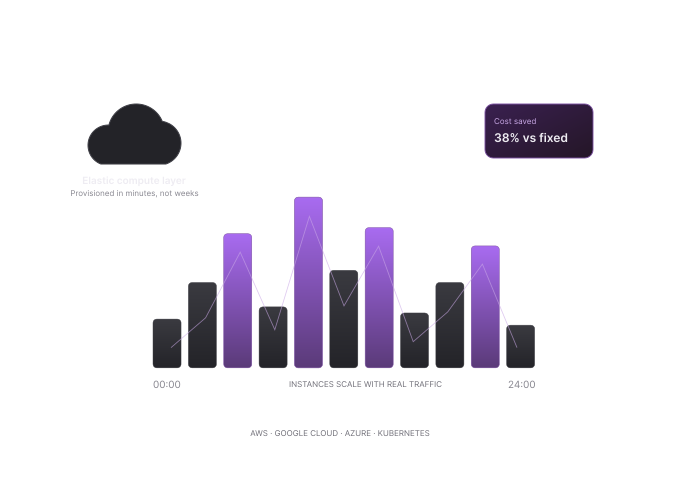
Set up the required cloud infrastructure around the compute, storage, network, access and deployment needs of the workloads being migrated.

Validate the Migrated Environment

Check applications, integrations, data connections and relevant operating requirements before moving the environment into regular use.

Modernize Where Required

Reconfigure or modernize components where the existing architecture cannot be carried into the target environment effectively.

Move What Makes Sense, Build Around What Remains

Explore Our Insights

Cloud migration should begin with an understanding of the environment the workload already depends on.

We examine existing applications, infrastructure, data, integrations and operational dependencies before defining what should move, what may need modernization and what can remain where it is.

From there, we design and implement the cloud environment around the workload and validate how the application operates within its new infrastructure.

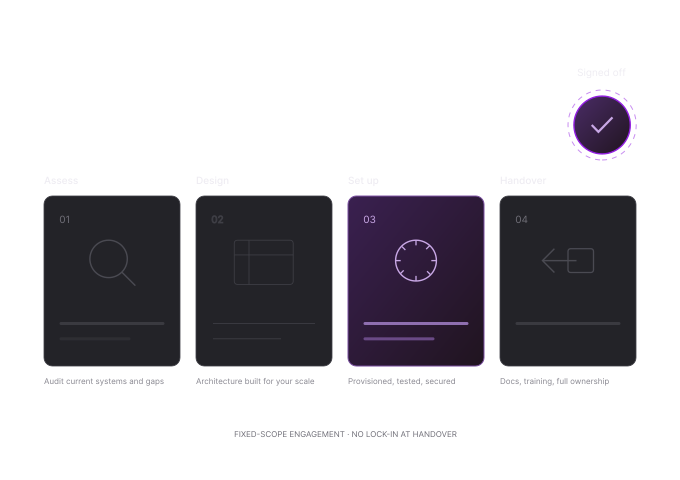
Review the applications and workloads in scope together with their infrastructure, data, integrations and relevant operational dependencies.

Establish what needs to move, what will remain in the existing environment and which dependencies need to be accounted for during the transition.

Determine whether workloads can be rehosted, need reconfiguration or require modernization before or during migration.

Configure the target infrastructure around application deployment, compute, storage, networking, access and connectivity requirements.

Move workloads according to the agreed dependencies and migration stages rather than approaching the environment as one undifferentiated migration.

Confirm that migrated applications, data connections, integrations and relevant infrastructure requirements are working as expected before operational handover.
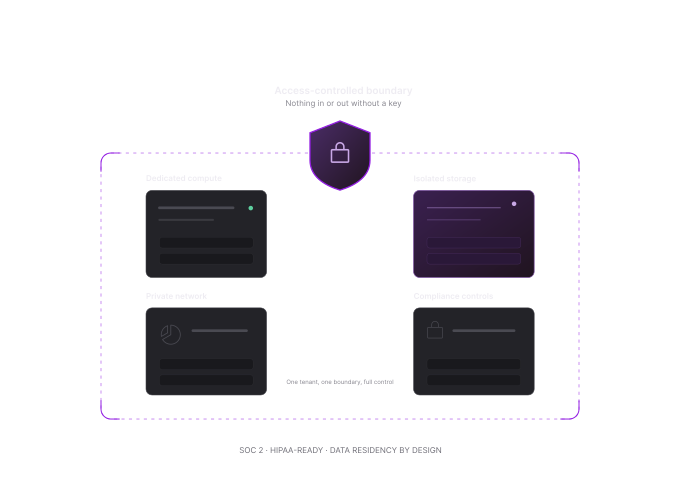
Move What Makes Sense, Build Around What Remains

Cloud Migration & Implementation Connects to the Wider Transformation Ecosystem

Managed Cloud Solutions
Infrastructure Consulting & Setup
Infrastructure as a Service (IaaS) & GPU Infrastructure

1

/3

Managed Cloud Solutions

Cloud Environments Managed Around Your Operations

Learn More

Infrastructure Consulting & Setup

Design Infrastructure Around What Your Systems Need

Learn More

Infrastructure as a Service (IaaS) & GPU Infrastructure

Compute Capacity Built Around Your Workload

Learn More

Managed Cloud Solutions

Cloud Environments Managed Around Your Operations

Learn More

Infrastructure Consulting & Setup

Design Infrastructure Around What Your Systems Need

Learn More

Infrastructure as a Service (IaaS) & GPU Infrastructure

Compute Capacity Built Around Your Workload

Learn More

What a Structured Migration Can Enable

  • Clearer scope across applications and workloads being migrated
  • Dependencies identified before implementation begins
  • Migration sequencing aligned with application relationships
  • Target infrastructure prepared around actual deployment requirements
  • Existing systems retained where they remain outside the migration scope
  • Data and integration requirements considered during transition planning
  • Modernization introduced where the target environment requires architectural change
  • Validation included as part of migration implementation
  • Clearer understanding of the environment moving into ongoing operations

Cloud Migration & Implementation FAQs

The service can include migration scoping, application and workload assessment, dependency mapping, target cloud environment preparation, workload migration, deployment, validation and post-migration infrastructure optimization. The exact scope depends on the applications and technology environment involved.

Cloud Migration as a Service provides a structured approach to moving suitable applications, workloads or data from an existing environment into cloud infrastructure. It considers the application architecture, dependencies, integrations and operating requirements that need to be addressed as part of the migration.

We begin with the applications and workloads in scope, identify their dependencies and understand what will remain in the existing environment. From there, the migration can be structured around the target infrastructure, migration path, sequencing, deployment requirements and validation needed for each workload.

No. Some workloads may be suitable for rehosting, while others may require reconfiguration or modernization. The appropriate approach depends on the application and what is required for it to operate in the target environment.

Yes, where modernization is required. Cloud Modernization Services may be relevant when existing application or infrastructure components need to change to operate appropriately in the target cloud environment. Migration does not automatically mean modernization.

Effective Cloud Migration Services need to identify the systems surrounding the workload before it moves. That may include databases, APIs, integrations, data flows, authentication, connected applications and infrastructure components that continue operating elsewhere.

Yes. For environments with several applications or interconnected workloads, migration can be organised into appropriate stages or groups based on dependencies and operating requirements. The sequence should follow the technology environment rather than an arbitrary migration schedule.

Enterprise Cloud Migration can involve multiple applications, data sources, integrations and technology environments. We establish the relationships between them before defining migration scope and sequencing so that one workload is not moved without considering the systems that depend on it or support it.

A Cloud Migration Company should be able to understand the application environment as well as the cloud environment. The migration approach should explain what is moving, what it depends on, how the transition will be sequenced, what needs to change and how workloads will be validated after migration.

Cloud Consulting Services are relevant where an organization still needs broader advice around cloud direction, architecture or migration feasibility. Cloud Migration & Implementation is more execution-focused. It takes a defined migration requirement into planning, target-environment preparation, migration, deployment and validation. Where broader infrastructure assessment and architecture are required first, Infrastructure Consulting & Setup remains the more appropriate service.

Discuss Your Migration Scope

Share what you are planning to move and the environment it runs in today.

We can help define the migration scope, map the dependencies involved and take the requirement through cloud environment setup, migration and validation.

Get to Know Us

Meaningful Solution Starts
With a Conversation!