Enterprise Software Development

Enterprise Software Built Around Your Operations

We engineer business-critical systems that bring complex operations, multiple teams, and connected processes into one structured software environment.

Trusted by startups and enterprises worldwide

Built for the Realities of Enterprise Operations

As operations become more specialised or interconnected, standard platforms may no longer support how work needs to move across teams, systems, approvals, and data.

SumCircle provides enterprise software development services for organisations that need business-critical systems shaped around their operating requirements. We examine how users, workflows, rules, information, and existing platforms work together before defining the software.

This approach to enterprise application development creates a system that reflects the realities of the business without introducing unnecessary complexity. The result is enterprise software designed to support dependable operations and accommodate evolving requirements.

Turning Operational Complexity Into Workable Software

Explore Our Insights

Enterprise software must account for more than a list of features. It needs to support different users and responsibilities, translate business rules into dependable workflows, manage information appropriately, and connect with the wider technology environment.

Our approach to custom enterprise software development begins with the operating model the system needs to support. We then determine what should be retained, extended, integrated, or custom-built.

The objective is to create software that handles operational complexity clearly and remains manageable as processes, users, integrations, and business priorities evolve.

How Enterprise Software Development Delivers Real Value

Operational Control

Bring interdependent workflows, approvals, and responsibilities across business functions into a structured operational system.

Rule Consistency

Translate complex policies, conditions, and decision logic into workflows applied consistently across the enterprise. 3

Access Governance

Give each team and user group appropriate access, actions, and visibility while maintaining clear process ownership.

Process Continuity

Connect applications, data, and operational steps so work moves across systems without losing context or control.

Scalable Architecture

Support new processes, users, integrations, and business requirements without repeatedly restructuring the software.

Practical Modernization

Retain, extend, integrate, or rebuild existing systems based on their operational value and future relevance.

An Enterprise Development Approach Grounded in Operations

Explore Our Insights

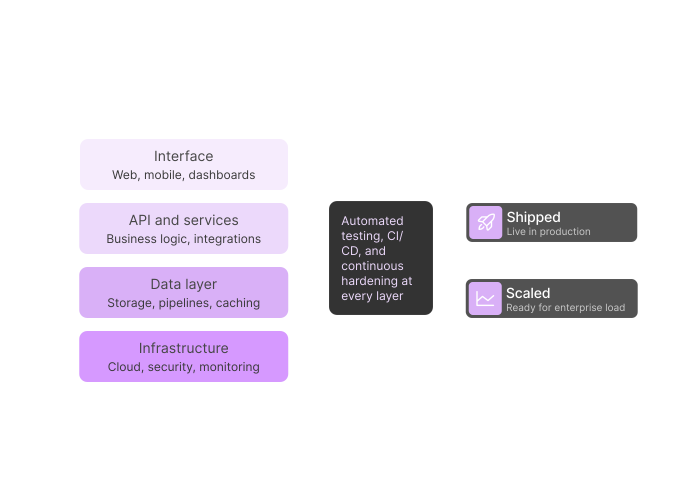
Effective enterprise software development begins with understanding the operating environment the system must support. We establish how users, workflows, business rules, systems, data, and governance requirements relate before defining the solution.

Architecture and implementation then follow the same operational logic. This creates continuity from the initial requirement through development, integration, validation, deployment, and continued evolution. M test 

We examine the business objective, users, responsibilities, workflows, rules, constraints, and outcomes the system needs to support.

We review current applications, platforms, data, integrations, and dependencies to determine what should be retained, extended, connected, or replaced.

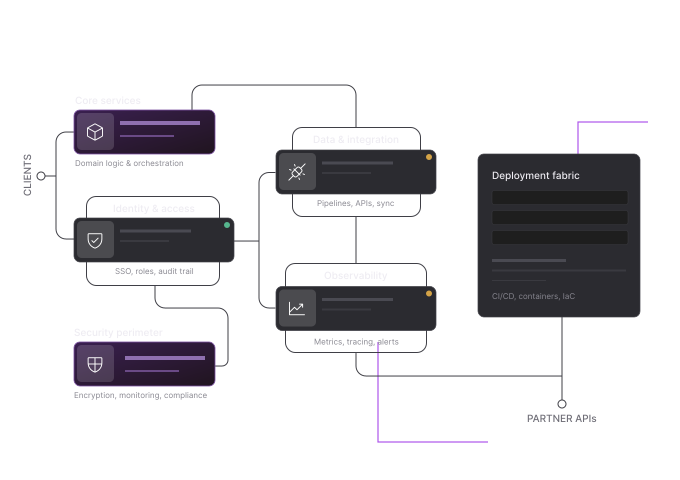
We translate operational requirements into a structured architecture covering functionality, access, data, integrations, and system responsibilities.

We develop the application in practical stages and connect it appropriately with the systems and information the business already uses.

We validate the software against its intended workflows, support deployment, and continue evolving it as operational requirements change.
An Enterprise Development Approach Grounded in Operations

Enterprise Software Within a Connected Development Ecosystem

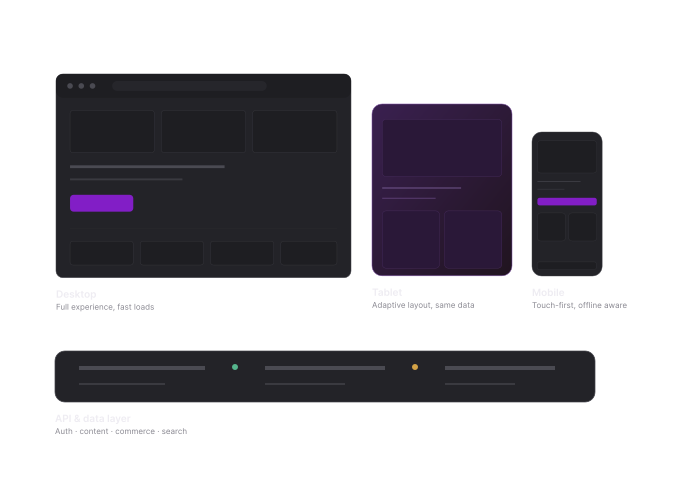
Web Application Development
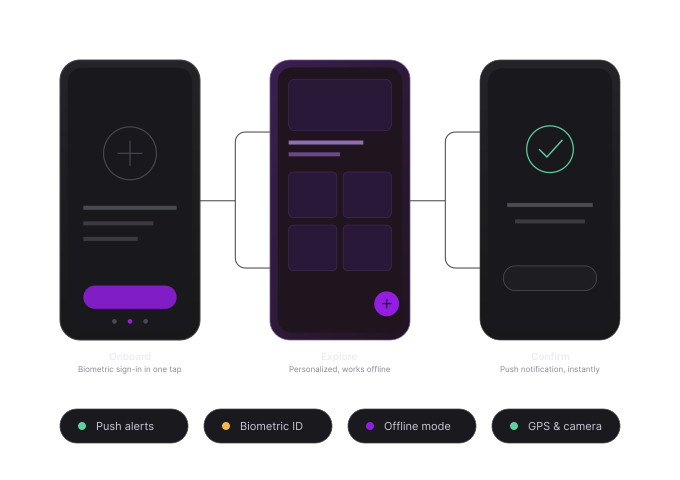
Mobile Application Development
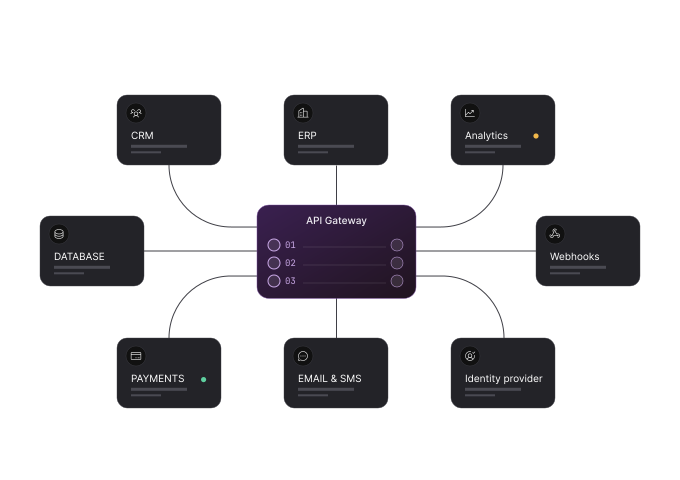
API & Systems Integration

1

/3

Web Application Development

Web Applications Built Around Real User Tasks

Learn More

Mobile Application Development

Mobile Applications Designed Around Real-World Use

Learn More

API & Systems Integration

Make Your Systems Work Together

Learn More
Web Application Development

Web Applications Built Around Real User Tasks

Learn More

Mobile Application Development

Mobile Applications Designed Around Real-World Use

Learn More

API & Systems Integration

Make Your Systems Work Together

Learn More

What Business-Aligned Enterprise Software Enables

  • Software aligned with complex business operations and workflows
  • Clearer responsibilities and access across different user roles
  • More coherent movement of work across teams and systems
  • Better connection between enterprise applications and relevant data
  • Less dependence on manual handoffs between disconnected platforms
  • A structured foundation for additional functionality and integrations
  • A more manageable enterprise software environment over time
  • Greater flexibility to support evolving processes and requirements

Enterprise Software Development FAQs

Enterprise software development involves designing and building business-critical systems around an organisation’s operations, users, workflows, rules, data, integrations, access requirements, and wider technology environment.

Custom enterprise software may be appropriate when standard platforms cannot adequately support the organisation’s operating model, when workflows extend across multiple systems, or when different teams and user roles need purpose-specific functionality.

Our enterprise software development services cover the architecture, development, integration, validation, deployment, and continued evolution of business applications, operational platforms, portals, workflow systems, dashboards, and connected applications.

Standard software is designed around requirements shared by many organisations. Enterprise software can be designed around the specific workflows, responsibilities, rules, information, and system relationships of one organisation.

Yes, where the existing platforms provide suitable ways to exchange information or actions. We assess the current environment and define how the new application should interact with relevant systems, APIs, interfaces, and data sources.

No. Replacement is only one option. We determine what can be retained, extended, integrated, consolidated, or rebuilt based on the business requirement and the condition of the existing technology.

We identify what each user group needs to view, manage, approve, or complete within the system. These responsibilities inform the application’s workflows, access structure, interfaces, and business rules.

Complex operations do not automatically require unnecessarily complicated software. Clear architecture, defined system responsibilities, proportional functionality, appropriate integration, and structured documentation help keep the application manageable.

The timeline depends on functional scope, workflow complexity, user roles, data, integrations, existing technology, validation requirements, and deployment needs. These factors must be assessed before an appropriate delivery plan can be defined.

As an enterprise software development company, SumCircle connects business context with architecture and engineering execution. We work to understand the operating environment first, then translate it into software that can be built, integrated, maintained, and extended.

Build Around How Your Business Operates

When standard platforms cannot support the complexity of your operations, we help define and build enterprise software around the users, workflows, systems, data, and requirements that make your business work.

Get to Know Us

Meaningful Solution Starts
With a Conversation!