Commerce Platform Fit
The right platform depends on the business model, customer experience, operating requirements and expected scale. Technology decisions should follow those needs rather than a preference for a particular platform.


Technology that connects the buying experience with the systems and workflows behind every transaction.
Customers interact with products, content, accounts, carts,
checkout and payments. Behind that experience, the business coordinates orders,
inventory, fulfilment, customer information, integrations and operational
workflows.
As an ecommerce business grows, these parts can become
distributed across platforms, plugins and applications. Customer-facing changes
become harder to implement, order processes require more manual coordination,
and teams have less visibility across the commerce environment.
Our ecommerce software development services help
organisations determine what should remain platform-based, what needs to
integrate, where customisation creates value and which requirements genuinely
need custom software. We shape the technology approach around the business
model, operating requirements and expected scale.
Ecommerce technology must support more than the transaction customers see. The storefront, orders, payments, fulfilment workflows and business systems need to work together without introducing unnecessary operational complexity.
A polished storefront can make purchasing easier, but the
customer experience also depends on what happens after an order is placed.
Payments, order handling, inventory information, fulfilment and customer
communication all rely on technology operating behind the interface.
Adding more plugins or rebuilding the entire environment
does not automatically resolve these dependencies. The more useful question is
which parts of the existing setup continue to fit, which systems should
exchange information and where platform limitations justify custom development.
We begin with the commerce model and the operation
supporting it. This creates a clearer basis for choosing between platform
implementation, customisation, integration, headless architecture or
purpose-built software.
“Good ecommerce technology connects what customers buy
through with what the business operates through.”
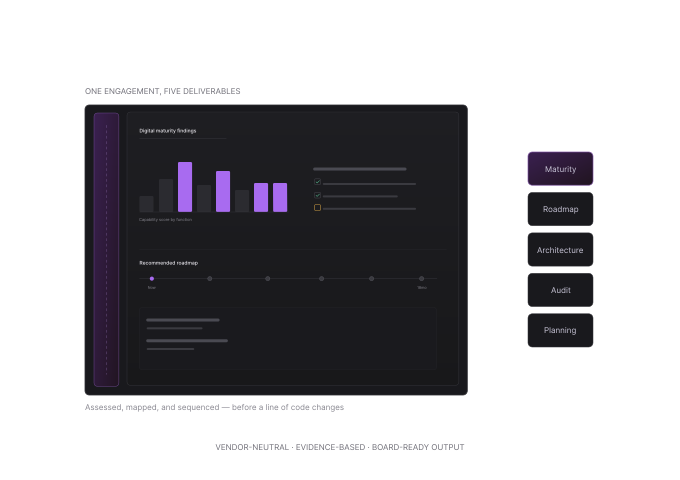
We assess the business model, operational requirements, existing technology and expected scale before recommending a platform-based, customised, headless or custom approach.
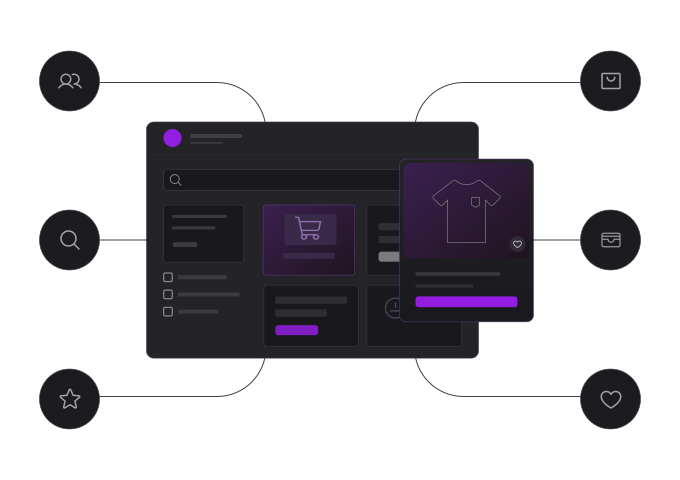
We structure commerce applications around the relationship between customer journeys, orders, payments, fulfilment workflows and the teams managing them.
We design APIs and integration layers that allow suitable commerce platforms, content management systems, CRM applications and other business systems to exchange information where technical access permits.
We develop business-specific applications, workflows and commerce functionality where standard platform capabilities no longer fit the requirement.
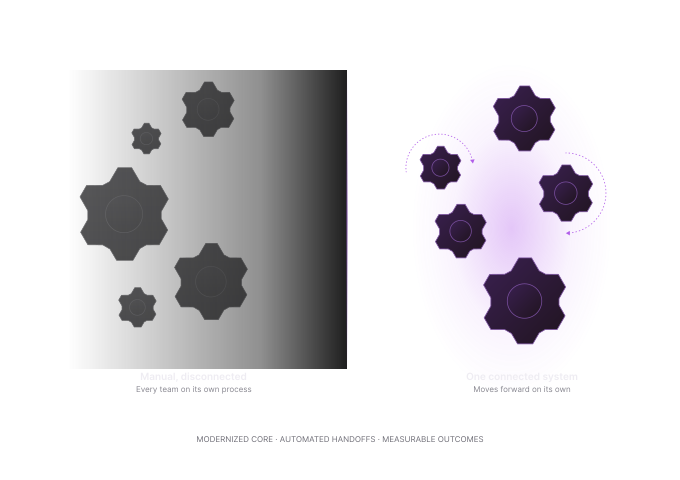
We automate appropriate order handling, notifications, information movement and repeatable operational steps while preserving human oversight where decisions require it.

An ecommerce transaction moves through more than a
storefront. Product and customer information informs the buying experience,
checkout creates an order, payment activity changes its status, and fulfilment
teams require accurate information to complete the process.
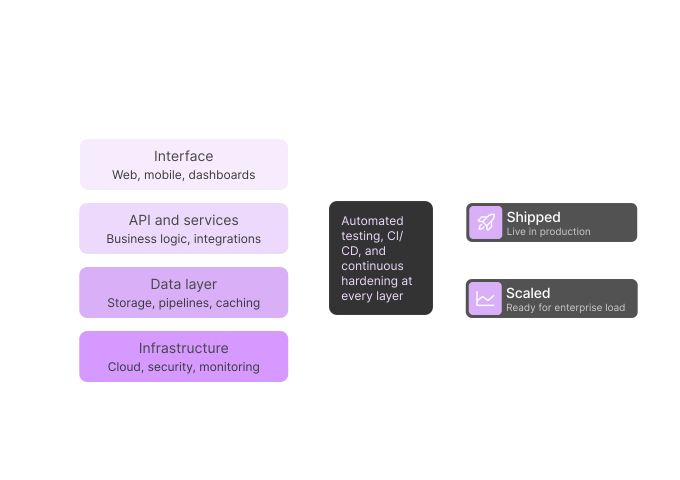
We structure technology around this flow. Customer-facing
applications support the buying experience, commerce platforms manage
appropriate transaction logic, integrations connect CMS, CRM and other
accessible systems, and intelligent workflows organise repeatable operational
activity. Dashboards can then provide relevant teams with a clearer view of
orders, workflows and exceptions.
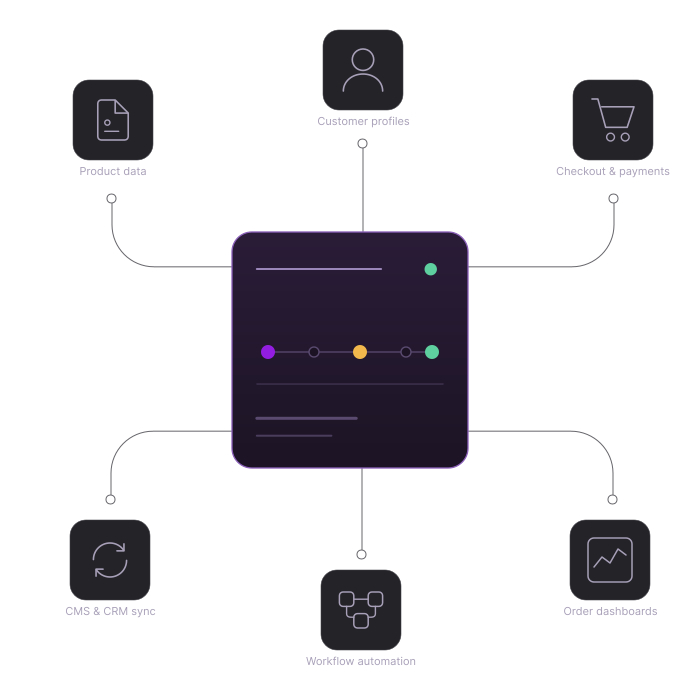
SumCircle combines consulting, custom software, intelligent workflows, AI and cloud capabilities to build ecommerce technology around customer journeys, transactions, operations and changing business needs.
Build Commerce Around How Your Business Works
Learn MoreClearer Technology Decisions Built Around Your Business
Learn MoreModernise Systems and Workflows Without Disrupting Operations
Learn MoreInfrastructure Built Around What Needs to Run
Learn MorePut Intelligence Where Work Happens
Learn MoreCustom Software Built Around Your Business
Learn More
Build Commerce Around How Your Business Works
Learn More
Clearer Technology Decisions Built Around Your Business
Learn More
Modernise Systems and Workflows Without Disrupting Operations
Learn More
Infrastructure Built Around What Needs to Run
Learn More
Put Intelligence Where Work Happens
Learn More
Custom Software Built Around Your Business
Learn More
A focused digital transformation engagement that improved HOBB’s post-migration WordPress website across performance, design, SEO, navigation, responsiveness and conversion visibility.

A custom Shopify website development engagement for GRAVL, covering theme selection, end-to-end storefront customization and complete Shopify store development for a modern ecommerce experience.
Discuss your ecommerce model, current platforms and
operational requirements with us to determine what should be retained,
connected, customised or newly built.