


Understanding the Foundation Businesses Need Before AI Can Deliver Meaningful Value
If you hang around business leaders long enough, you’ll notice a pattern.
Someone will throw out the phrase digital transformation, and five minutes later another person says AI adoption, as if they’re talking about the same thing. They’re not.
But let’s be fair it’s easy to get them tangled. Both involve tech. Both involve big investments. And both get tossed around in pitch decks to impress investors. In reality though, digital transformation is the foundation, and AI adoption is one of the sharpest tools you can add on top.
At Sumcircle Technologies we see this confusion all the time. A company says they’re “ready for AI,” but when we peek behind the curtain, they’re still running operations on legacy systems from 2009.
It’s like buying a Ferrari and trying to drive it on a dirt path. You need the road before the car.
So, let’s clear things up, what’s digital transformation, what’s AI adoption, how do they differ, and where do AI tools for business come in as the game-changer in 2026?
Let’s dive right in!
01 - What is Digital Transformation?
Let’s strip away the jargon.> Digital transformation is basically modernizing how your business runs top to bottom using digital tech.
Not one app. Not one shiny tool. A whole mindset shift.
- A hospital moving from paper records to cloud-based patient management? Digital transformation.
- A bank cutting down queues by letting people open accounts on an app? Digital transformation.
- A retailer connecting its website, physical store, and warehouse inventory so customers always know what’s in stock? Yup, digital transformation.
It’s about building infrastructure that can survive in today’s world. And yes, it’s a grind. It usually takes years, not months. But without it, AI has nowhere to plug in.
The urgency is real too. A 2024 PwC survey found that 60% of CEOs in India believe digital transformation will make or break their competitiveness in the next five years.
That’s not consultant-speak, that’s CEOs admitting: “If we don’t fix this, we’re dead in the water.”
02 - What is AI Adoption?
Now, AI adoption is a bit different. It’s not about building the foundation it’s about supercharging what you already have.
AI is where businesses start asking: What if we could predict trends instead of just reacting? What if we could automate the boring stuff and let people focus on the creative or strategic work?
Some quick real-world examples in 2025:
- Customer service: AI chatbots now sound less like robots and more like actual humans. They don’t just spit out scripted replies they can detect frustration in tone and adjust accordingly.
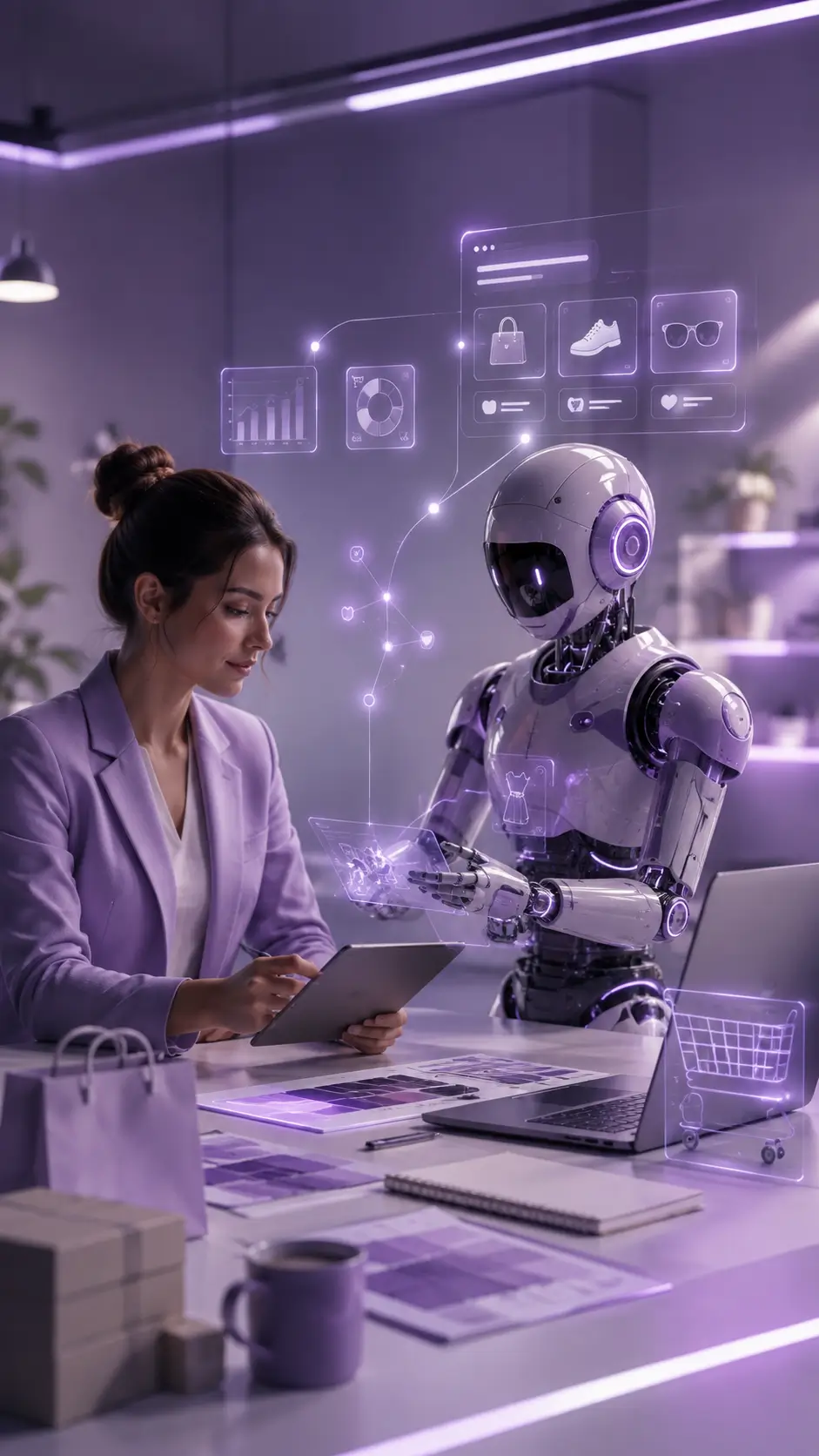
- Marketing: No more blasting ads into the void. AI tools can figure out who’s most likely to buy, when they’ll buy, and what ad copy will actually convert them.
- Supply chains: With AI demand forecasting, companies aren’t getting blindsided by shortages or overstock. They can cut costs before problems show up.
And it’s not just big corporations anymore. AI tools are becoming accessible to smaller businesses too.
According to McKinsey’s 2025 Global AI Report, 64% of businesses worldwide are using at least one AI tool daily, compared to only 35% in 2022. That’s nearly double in just three years.
03 - Key Differences at a Glance
Here’s the easiest way to separate the two:
| Aspect | Digital Transformation | AI Adoption |
|---|---|---|
| Scope | Big-picture overhaul of processes and culture | Integrating AI into specific workflows |
| Goal | Modernise and digitise operations | Automate, optimise and predict |
| Example | Moving from manual invoicing to a cloud-based ERP | Using AI to automatically detect fraudulent invoices |
| Timeframe | Long-term and multi-phase | Can deliver quick wins |
Think of it like building a kitchen (digital transformation) versus adding smart appliances that cook faster and cleaner (AI adoption). You can’t plug in a smart oven if your house doesn’t even have electricity.
04 - How They Work Together
Here’s where it clicks: you don’t pick one over the other. The real magic is when both work together.
Take healthcare. If a hospital digitizes its records, that’s digital transformation. But if it layers AI on top to scan X-rays and catch diseases earlier, that’s AI adoption amplifying the impact.
Or e-commerce:
- Digital transformation sets up the storefront, payment gateways, cloud infrastructure.
- AI adoption personalizes the experience, predicts what a customer might want, and ensures the right product is at the right warehouse at the right time.
One without the other feels incomplete. Like having Spotify without recommendations you can still play songs, but you’re missing the experience.
05 - Which One Should You Start With?
This depends on where your business is right now.
- If your systems are outdated, your data is scattered, and your team is still relying on manual workarounds you can’t just sprinkle AI on top and hope for miracles. You need AI digital transformation first. That’s your foundation.
- If you’ve already modernized cloud systems, integrated workflows, digital customer touchpoints then you’re ready to start plugging in AI tools. That’s where you’ll see fast, tangible wins.
A lot of smart companies also start small. Maybe roll out an AI tool in customer service or marketing first, then expand to other areas once you see results. Think of it as dipping your toes before diving all the way in.
Final Thought
Here’s the takeaway: in 2026, AI tools for business aren’t optional anymore. They’ve moved from “nice-to-have” to “must-have.” But they only shine if the groundwork is there. Digital transformation sets the stage, AI adoption steals the show. At Sumcircle Technologies, we’ve seen the pattern again and again the companies that combine both are not just surviving, they’re pulling ahead. They’re making better decisions, creating smarter customer experiences, and scaling faster than their competitors. The companies that ignore it? They’re going to look like those businesses that laughed at the internet in the ’90s. So, ask yourself: is your foundation ready? And if it is, what AI tools are you going to plug in next? Because in 2025, sitting on the sidelines isn’t really an option anymore.